





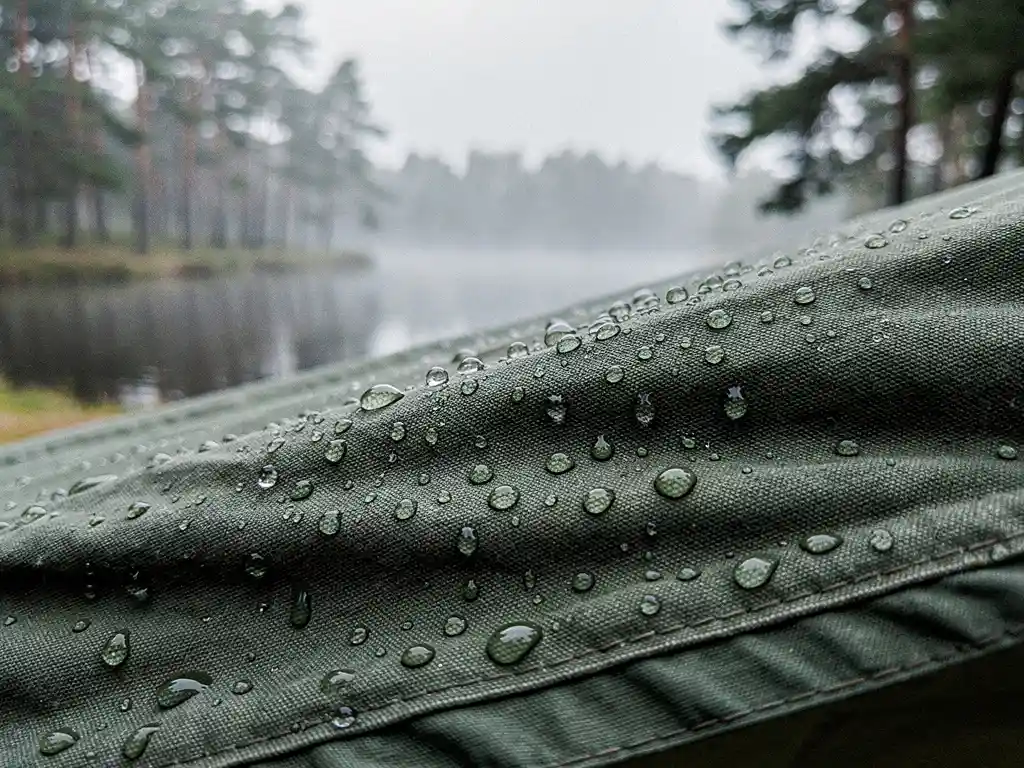
The best waterproofing treatment for tent fabric is a product that penetrates deep into the fibres of the material, provides long-lasting water repellency and is suitable for the specific type of fabric you are using. For campers, a spray or liquid waterproofing treatment based on fluoropolymer or silicone is most effective, provided it is applied to a clean and dry fabric. In this article, we answer the most frequently asked questions about waterproofing fabric so that you know exactly what to do and when.
Which type of waterproofing treatment works best for tent fabric?
For tent fabric, a fluoropolymer- or silicone-based waterproofing treatment works best. Fluoropolymer-based treatments offer the strongest water repellency and are suitable for canvas, polyester and nylon. They penetrate deep into the fibres and form a durable protective layer that repels rain, moisture and dirt without compromising the fabric’s breathability.
Silicone-based products are cheaper but less durable. They work well for short-term protection, but need to be reapplied more often. For camping equipment that is used intensively or left outdoors for long periods, a fluoropolymer formula is the smarter long-term investment.
When making your choice, also bear in mind the type of fabric. Canvas absorbs differently to polyester, and a water-repellent treatment designed specifically for synthetic materials may not work as well on traditional canvas. Always check that the product is suitable for your specific material before applying it.
How long does a wood preservative remain effective?
A good waterproofing treatment remains effective on tent fabric for one to two seasons on average, depending on how intensively the tent is used and how often the fabric is cleaned. Tents that are pitched regularly, exposed to heavy rain or cleaned frequently lose their waterproofing more quickly than tents that are used only occasionally.
Factors that affect the lifespan of the impregnation treatment include:
- Frequency of use: The more often the tent is used, the faster the protective coating wears away.
- Exposure to UV light: Prolonged exposure to sunlight damages the impregnating agent and reduces its effectiveness.
- Cleaning frequency: Every wash removes part of the waterproofing layer.
- Storage conditions: A tent that is stored whilst damp will lose its water-repellent properties more quickly.
As a rule of thumb, you should check at the start of each camping season whether the fabric is still sufficiently water-repellent. This will prevent you from discovering, in the middle of a downpour, that your tent is no longer watertight.
Ready for your next adventure?
Discover Rokimi’s professional cleaning and protection products and keep your tent fabric, awnings, boat covers and other outdoor equipment looking good for longer.
- ✓ Professional formula
- ✓ Specialist in cleaning & protection
- ✓ Certified quality
Do you need to clean a tent before waterproofing it?
Yes, it is absolutely essential to clean a tent thoroughly before waterproofing it. A waterproofing agent only adheres properly to clean fibres. If there is dirt, green deposits, mould or greasy residues on the fabric, the treatment will not penetrate the material properly, resulting in an uneven or weak protective layer that breaks down quickly.
Cleaning doesn’t have to be complicated. First, remove loose dirt with a soft brush and cold water. Then use a suitable tent shampoo for light to moderate soiling, or a stronger cleaner for stubborn stains such as mud, grass stains or black streaks. Next, rinse the fabric thoroughly with clean water and leave it to dry completely before you start waterproofing it.
This last point – drying – is crucial. Impregnating a damp cloth results in poor adhesion of the product and may even encourage the growth of mould. It is best to wait a full day of dry, sunny weather before applying the impregnating agent.
What is the difference between impregnation and waterproofing?
Impregnation and waterproofing are often used interchangeably, but there is an important distinction. Impregnation involves treating the fibres of a fabric so that water droplets roll off rather than being absorbed. Waterproofing refers more to the overall watertightness of a tent, including the coating on the inside of the fabric and the seams.
An impregnated fabric is water-repellent on the outside, but that does not automatically mean that the tent is completely waterproof. A tent’s waterproofing is also determined by:
- The quality of the factory coating on the inside of the fabric.
- The finishing and sealing of the joints.
- The condition of the zips and fastenings.
Waterproofing is therefore a maintenance step that restores or enhances the fabric’s outer water-repellent properties. It is not a substitute for seam sealing and does not solve problems caused by a worn-out inner coating. For a fully waterproof tent, you need both: a well-waterproofed outer fabric and intact seams and coating.
How do you apply a waterproofing agent to tent fabric correctly?
To apply a waterproofing agent correctly, spray or rub it evenly onto the clean, slightly damp fabric and then allow it to soak in before letting the fabric dry. The exact method depends on the product, but the steps below apply to most products.
- Clean the fabric thoroughly and remove all dirt, grime and stains.
- Rinse the fabric with clean water and allow it to dry almost completely. A slightly damp cloth absorbs the impregnating agent better than a bone-dry one.
- Apply the waterproofing agent in an even layer over the entire surface. Use a spray bottle or a soft sponge and make sure you don’t miss any spots, as untreated areas will still absorb water.
- Rub the ointment in for stubborn or heavily worn areas, so that it penetrates deep into the fibres.
- Leave the fabric to dry completely in a well-ventilated place or in the sun. Some products work better when warmed up.
It is best to apply the waterproofing treatment whilst the tent is pitched. This ensures you reach all the corners and seams properly and prevents you from missing any creases or folded areas.
When do you know that your tent needs re-waterproofing?
Your tent needs to be re-waterproofed when rainwater no longer beads up and rolls off the fabric, but soaks into the material and forms dark, wet patches. This phenomenon is known as “wetting out” and is the clearest sign that the fabric’s water-repellent properties have worn off.
Other signs that it is time for a new course of treatment:
- After the rain, the fabric feels heavy and saturated.
- Damp patches appear on the inside of the tent, even if the coating and seams are still intact.
- After it has rained, the fabric takes much longer to dry than it used to.
- The tent has been used intensively throughout the season or has spent the winter outdoors.
Don’t wait until the tent fabric actually starts to leak before taking action. Regular waterproofing as a preventative measure, preferably at the start of each camping season, is far more effective than waiting until problems become apparent. A well-maintained tent will last considerably longer and perform better in changeable weather.
How Rokimi helps with waterproofing your tent fabric
Here at Rokimi, we have developed a comprehensive range of products specifically tailored to the needs of campers who want to keep their equipment in top condition. Our products are ready to use, do not need to be diluted and work on all common fabric types, such as canvas, polyester and nylon.
This is how we provide a complete care cycle:
- Hood & Tent Shampoo: For regular cleaning of green deposits, dust and light soiling.
- Heavy Duty Cleaner: For stubborn stains such as mud, grass stains and black streaks that have penetrated deep into the fibres.
- Hood & Tent Protection: The most effective waterproofing treatment of its kind, which makes the cleaned fabric optimally water-repellent and protects it against rain, damp and dirt.
Together, these three products form a comprehensive approach to fabric waterproofing that both beginners and experienced campers can put into practice straight away. Take a look at our full product range or find out which applications our products are suitable for. Ready to get your tent ready for the new season? Go to rokimi.com and place your order today.
Everything you need for a clean and protected outdoor lifestyle.
Discover Rokimi’s range of professional cleaning and protection products.
VIEW ALL PRODUCTS →Frequently Asked Questions
Can I use a waterproofing treatment on a tent that hasn’t been treated for years?
Yes, that’s certainly possible, but you’ll need to pay extra attention to the preparation. A fabric that hasn’t been waterproofed for a long time often has deeper-seated dirt, possible mould patches and a completely worn-out protective layer. In that case, clean the fabric thoroughly with a Heavy Duty Cleaner before applying the waterproofing agent, and consider using a double coat of waterproofing for the best results. Be patient: the protection may be slightly less effective in the first season after a long break, but after a second treatment at the start of the following season, you’ll be all set.
Is it safe to apply a wood preservative indoors?
This is strongly discouraged. Most waterproofing agents, particularly those based on fluoropolymers or silicones, contain solvents or chemicals that may be harmful if inhaled. Always apply the product outdoors in a well-ventilated area, preferably on a calm, windless day so that the spray does not blow back towards you. Wear gloves if necessary and avoid direct contact with the eyes. Always read the safety instructions on the packaging before you start.
What if my tent still lets water in after I’ve waterproofed it?
If your tent is still leaking after a recent treatment, the problem is probably not with the waterproofing but with the seams or the inner coating. Check that the seams are still properly sealed, as seam injection or seam-sealing tape wears out over time. Also check that the inner coating of the fabric isn’t flaking or crumbling, which is a sign of ageing material that requires a different treatment. Impregnation restores the outer fabric’s water-repellency, but does not replace seam sealing or the inner coating.
What is the best way to store my tent after waterproofing it, so that it remains protected for as long as possible?
First and foremost, make sure the tent is completely dry before you pack it away, as even a well-waterproofed tent can develop mould if it is stored whilst damp. Store the tent in a dry, cool place away from direct sunlight, as UV rays can damage the waterproofing even whilst the tent is in storage. It is best to use a loose storage bag or a cotton bag rather than a tight-fitting nylon bag, so that the fabric can breathe and no moisture is trapped inside.
Can I also use a waterproofing agent on other camping equipment, such as an awning or a rucksack?
Absolutely. In most cases, a waterproofing treatment for tent fabric also works very well on other outdoor equipment made from similar materials, such as awnings, tarpaulins, rucksacks, rainwear or even garden furniture covers. Do always check that the product is suitable for the specific material of the item you wish to treat, and follow the same steps: clean first, then waterproof on a clean surface. This way, you can maximise the lifespan of all your outdoor gear with just one product.
How much waterproofing treatment do I need for an average-sized tent?
The amount required depends on the size of the tent and the type of product you’re using, but for an average two-person tent, you’ll usually need 300 to 500 ml for a full treatment. Larger tents or those with an awning or canopy will, of course, require more. If in doubt, buy a little more than you think you’ll need, as it’s better to apply an even second coat to heavily worn areas than to run out of product halfway through.
Does it matter which season I waterproof my tent in?
The ideal time to waterproof your tent is at the start of the camping season, so that it is properly protected right from the start for the months of intensive use. Avoid waterproofing at temperatures below 10°C or in high humidity, as the treatment will not adhere or dry as effectively under these conditions. A dry, sunny day in early spring is ideal. If your tent is left outside during the autumn or winter, an extra treatment after the summer is recommended to ensure the fabric is well protected going into the colder months.