


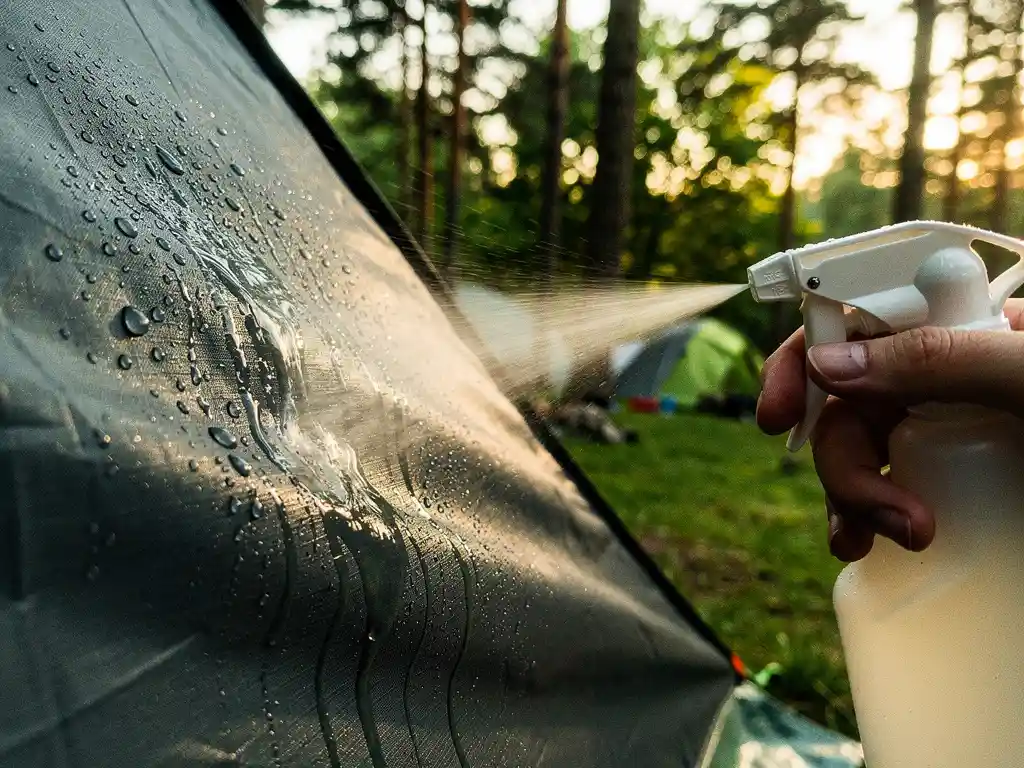
Nylon tent fabric is best waterproofed using a special water-based waterproofing agent suitable for synthetic fabrics. Apply the product to a clean, slightly damp piece of fabric and leave it to dry completely, preferably in the open air. Proper preparation is crucial: an uncleaned fabric will repel the waterproofing agent and do little to extend the protection. In this article, we answer the most frequently asked questions about waterproofing nylon tent fabric, from choosing the right product to maintenance.
Which waterproofing treatment works best on nylon tent fabric?
For nylon tent fabric, a water-based waterproofing agent works best. This type of product penetrates the fibres of synthetic materials without affecting the coating or colour. Always choose a product that is specifically suitable for nylon or polyester, as solvent-based products can damage or discolour synthetic fabrics.
Not all fabric waterproofing products are the same. Some come in a spray can and are handy for small areas, but for a whole tent or awning, a liquid waterproofing product applied with a sponge or brush often works more thoroughly. The advantage of a liquid product is that it covers the fabric more evenly and penetrates the fibres better, ensuring a longer-lasting water-repellent effect.
When purchasing, also check whether the product is resistant to UV radiation. Nylon discolours and weakens more quickly when exposed to sunlight, so a waterproofing treatment with UV protection offers a dual benefit: the fabric remains water-repellent and is protected against sun damage.
Do you need to clean nylon tent fabric before waterproofing it?
Yes, it is absolutely essential to clean nylon tent fabric thoroughly before waterproofing it. Dirt, green deposits and dust form a barrier that prevents the waterproofing agent from penetrating the fabric properly. A waterproofing agent applied to a dirty fabric adheres to the dirt rather than to the fibres, which greatly reduces the level of protection.
When cleaning, use a shampoo specially formulated for outdoor textiles. Ordinary washing-up liquid or household cleaning products may damage the existing water-repellent coating or leave residues that prevent the fabric from being properly impregnated. After cleaning, rinse the fabric thoroughly with clean water to ensure no soap residue remains.
For stubborn stains such as mud, black streaks or dried-on dirt, ordinary shampoo is sometimes not enough. In such cases, a more powerful cleaning agent is needed to work deeper into the fibres before you start waterproofing. Only when the fabric is truly clean does the waterproofing agent have the best chance of adhering properly and providing long-lasting protection.
How do you apply waterproofing treatment to nylon correctly?
Apply the water-repellent treatment to nylon by first dampening the fabric slightly, spreading the product evenly over the entire surface and then allowing it to dry completely. Make sure you do not leave any stains or drips, as uneven distribution will result in areas that are less water-repellent.
Follow these steps for the best results:
- Clean the cloth thoroughly and rinse away all traces of the sea.
- Keep the cloth slightly damp but not soaking wet. A damp cloth absorbs the impregnating agent better than a bone-dry one.
- Apply the waterproofing agent using a sponge, a soft brush or a spray bottle. Work in sections and ensure an even, thin layer is applied across the entire surface.
- Gently rub the product in so that it soaks into the fibres. Avoid rubbing too hard so as not to damage the fabric.
- Leave the cloth to dry completely outdoors or in a well-ventilated area. Hang the tent or sheet so that air can circulate freely around it.
- Check for dry patches after drying. Sprinkle a little water onto the cloth: it should form beads and roll off. If not, apply a second coat to that area.
Avoid using a tumble dryer or any direct heat source to speed up drying, unless the product label expressly recommends this. Excessive heat can damage nylon and affect the impregnated coating.
Can waterproofing damage nylon tent fabric?
Waterproofing will not damage nylon tent fabric if you use the right product and follow the instructions. Problems only arise if you use a product that is not suitable for synthetic fabrics, such as products containing harsh solvents or those intended for leather or canvas.
Nylon is a synthetic material that is more susceptible to certain chemicals than natural fabrics such as canvas. Products containing solvents can damage the fibre, alter the colour or damage the original coating. You should therefore always check the packaging to ensure that the product is specifically suitable for nylon or polyester.
Another risk is using too much product. A thick, clumpy layer of waterproofing agent dries unevenly, can leave marks and makes the fabric stiff. In this case, less is more: a thin, even layer works better and does not damage the material.
How long does nylon tent fabric remain water-repellent after impregnation?
Once impregnated, nylon tent fabric remains water-repellent for one to two seasons on average, depending on how intensively you use the tent and how you store the fabric. Frequent exposure to rain, sun and wind accelerates the loss of water-repellency.
Factors affecting the lifespan of the impregnation treatment are:
- Frequency of use: A tent that is used every week loses its protective properties more quickly than one that is used a few times a year.
- Storage: Storing your tent in a dry place will extend the life of the waterproofing. Storing a damp tent encourages mould growth and damages the protective coating.
- Exposure to UV radiation: Prolonged exposure to sunlight causes the water-repellent coating to break down more quickly.
- Cleaning: Regular washing with harsh detergents causes the waterproofing to wear off more quickly than gentle cleaning.
A practical way to check whether the waterproofing is still effective is the water beading test: splash a little water onto the fabric. If the water rolls off in small beads, the protection is still active. If the water soaks into the fabric or leaves a dark mark, it’s time to reapply the waterproofing.
When is waterproofing alone not enough for a nylon tent?
Impregnation alone is not enough if the fabric is damaged, shows signs of severe mould growth or is so heavily soiled that cleaning has not been effective enough. In such cases, an impregnating agent does not solve the underlying problem and offers only temporary or superficial protection.
Specific situations in which impregnation alone is insufficient:
- Tears or holes in the fabric: A waterproofing agent does not seal physical damage. Repair the fabric first using a repair patch or tape before applying the waterproofing agent.
- Deep-rooted mould: If mould has penetrated deep into the fibres, normal cleaning will not remove it completely. In that case, use a powerful cleaning agent specifically designed to tackle stubborn dirt before you start waterproofing.
- Ageing or damaged original coating: Some nylon tents have a factory-applied coating that flakes off over time. This makes the inside of the fabric feel sticky. Waterproofing will not solve this problem; in such cases, replacement or professional re-coating is the only real solution.
- Stubborn stains that have damaged the fibres: Stains caused by oil, paint or chemicals require targeted treatment with a powerful cleaning agent before impregnation is effective.
In short: waterproofing is the final step in a proper maintenance process, not the first. A clean and intact fabric is the basis for effective and long-lasting water-repellent protection.
How Rokimi helps with waterproofing your tent
Here at Rokimi, we have developed a comprehensive range of products to guide you through the entire maintenance process, from cleaning to protection. Whether you’re dealing with light soiling or stubborn stains, we offer a solution tailored to the specific needs of nylon tent fabric and other outdoor textiles.
Our range consists of three complementary products:
- Hood & Tent Shampoo: For regular cleaning of green deposits, dust and surface dirt. Safe for nylon, polyester and canvas, and ready to use straight away without dilution.
- Heavy Duty Cleaner: For stubborn dirt such as mud, grass stains and black streaks that have penetrated deep into the fibres. The powerful formula ensures the fabric is optimally prepared for impregnation.
- Hood & Tent Protection: The most effective waterproofing treatment of its kind. After cleaning, this product provides long-lasting water-repellent protection that shields the fabric from rain, moisture and dirt.
Alle producten zijn gebruiksklaar, hoeven niet verdund te worden en zijn geschikt voor kampeerders met elk ervaringsniveau. Zo maak je je tent snel en veilig klaar voor het nieuwe seizoen, zonder risico op beschadiging van je materiaal.
View our full product range, find out which applications find out which of our products are suitable, or go straight to the Rokimi website voor meer informatie en bestelmogelijkheden.
Frequently Asked Questions
Hoe vaak moet ik mijn nylon tent impregneren als ik hem intensief gebruik?
Bij intensief gebruik, zoals meerdere kampeerweekenden per maand, is het verstandig om je tent aan het begin én het einde van het seizoen te impregneren. Gebruik de waterpareltest tussendoor als leidraad: zodra water niet meer parels vormt maar in het doek trekt, is het tijd voor een nieuwe behandeling. Zo voorkom je dat je tent ongemerkt zijn bescherming verliest tijdens een regenbui.
Kan ik mijn nylon tent ook in de wasmachine wassen voordat ik ga impregneren?
Dit wordt over het algemeen sterk afgeraden. Machinewassen kan de naden, coating en constructie van een tent beschadigen, en de centrifuge belast het materiaal te zwaar. Reinig je tent altijd met de hand, met een geschikte tentshampoo en een zachte borstel of spons, zodat het materiaal intact blijft voor de impregneerbehandeling.
What should I do if my tent is still leaking after I’ve waterproofed it?
Als je tent na het impregneren nog lekt, is het lek hoogstwaarschijnlijk afkomstig van de naden in plaats van het doek zelf. Impregneermiddelen behandelen het doek, maar niet de naadverbindingen. Gebruik in dat geval een naadafdichtingsproduct (seamsealer) om de naden opnieuw te dichten. Controleer ook of er kleine scheurtjes of gaatjes in het doek zitten die eerst gerepareerd moeten worden.
Is het veilig om impregneermiddel te gebruiken op een tent met een lichte of witte kleur?
Ja, mits je een impregneermiddel op waterbasis kiest dat specifiek geschikt is voor synthetische stoffen. Producten op oplosmiddelbasis kunnen lichte kleuren vergelen of vlekken achterlaten. Test het middel bij twijfel altijd eerst op een klein, onopvallend stukje doek voordat je de hele tent behandelt.
Moet ik ook de binnenkant van mijn nylon tent impregneren?
Nee, de binnenkant van een tent hoef je niet te impregneren. Impregneermiddel breng je uitsluitend aan op de buitenkant van het buitendoek en eventueel de voortent. De binnentent is juist ontworpen om ademend te zijn, zodat condensatie naar buiten kan ontsnappen. Het impregneren van de binnenkant zou deze ademende werking kunnen blokkeren.
Kan ik mijn nylon tent impregneren terwijl hij opgezet staat?
Ja, en dat is zelfs een aanrader voor grote tenten en voortenten. Door de tent opgezet te behandelen, heb je goed zicht op het gehele oppervlak en voorkom je dat je stukken mist. Zorg wel dat je werkt op een bewolkte dag of in de schaduw, zodat het impregneermiddel niet te snel droogt voordat het goed in de vezels is getrokken.
Hoe berg ik mijn tent correct op na het impregneren om de bescherming zo lang mogelijk te bewaren?
Laat de tent na het impregneren altijd volledig drogen voordat je hem opbergt. Vouw hem losjes op en bewaar hem op een droge, koele plek uit direct zonlicht. Een vochtige of te strak opgerolde tent bevordert schimmelvorming en tast de waterafstotende laag sneller aan. Een katoenen opbergzak in plaats van een luchtdichte plastic zak helpt het materiaal te laten ademen tijdens opslag.
Related Articles
- Welke stappen volg je bij het impregneren van je tent als beginner?
- Hoe bescherm je tentdoek tegen groene aanslag na het impregneren?
- What should you do if your tent fabric absorbs water instead of repelling it?
- How does wind affect impregnation of tent fabric?
- Can you impregnate tent canvas with home remedies?