


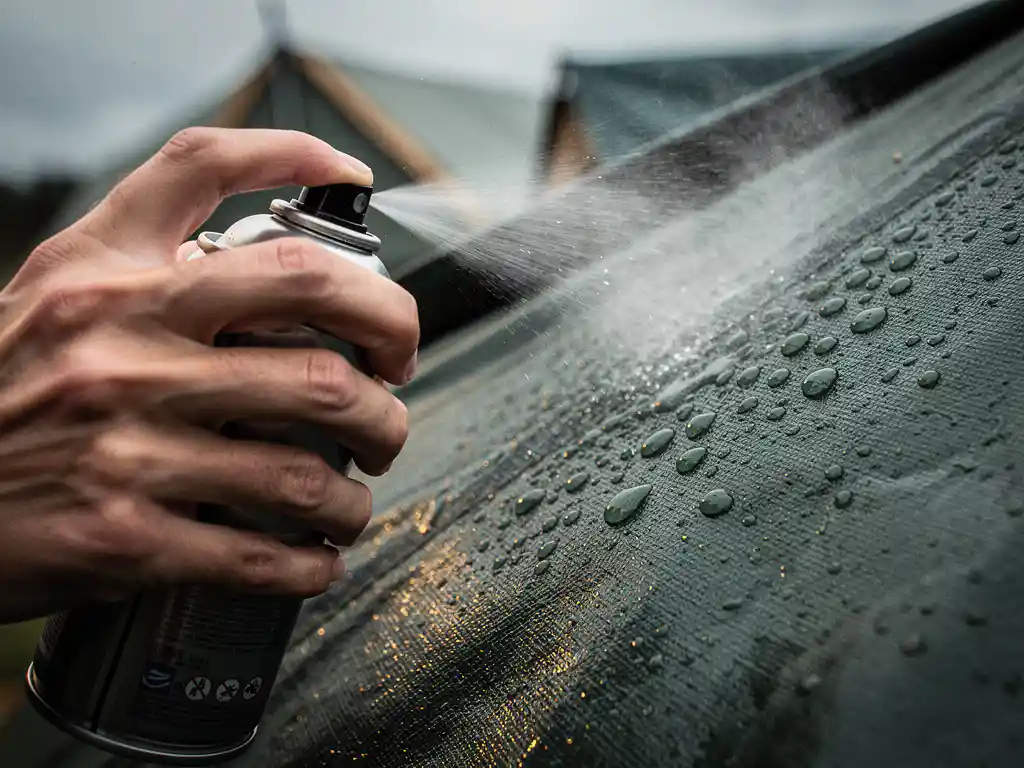
The best tips for waterproofing fabric are: clean the material thoroughly before you start, apply the waterproofing agent to a slightly damp surface, work in thin, even layers, and allow it to dry completely before the fabric comes into contact with rain or moisture again. Good waterproofing starts with good preparation. The cleaner and drier the fabric, the deeper the waterproofing agent penetrates the fibres and the longer the protection lasts. In this article, we answer the most frequently asked questions about waterproofing tent fabric, canvas and other outdoor fabrics.
When is the right time to waterproof fabric?
The best time to waterproof the fabric is immediately after a thorough clean, preferably at the start or end of the camping season. In practical terms, this means: in the spring before you use the tent for the first time, and in the autumn before you store your equipment away for the winter. This ensures that the fabric is always protected when it matters most.
Apart from the change of seasons, it’s also a good idea to check from time to time whether the water-repellent properties are still intact. A simple test: splash some water onto the fabric. If the water beads up into small droplets, the waterproofing is still working properly. If the water soaks in or leaves stains on the fabric, it is time to reapply the waterproofing.
Other situations where impregnation is advisable:
- After heavy use in rain or wind
- After washing or cleaning the cloth
- If you notice any visibly discoloured or water-absorbent areas
- After prolonged storage during which the material has been damp
How does a fabric waterproofing treatment work?
A water-repellent treatment works by applying a water-repellent layer to and within the fibres of the fabric. The active ingredients penetrate deep into the structure of the material and bond with the individual fibres. As a result, water droplets can no longer soak into the fabric, but roll off it as small beads. This principle is known as the lotus effect.
The difference compared to a standard water-repellent spray lies in the depth of its action. Good waterproofing agents do not just treat the surface, but penetrate right into the core of the fabric. This provides more durable protection that can withstand multiple showers and adverse weather conditions.
As well as repelling water, impregnation also provides protection against dirt and mould. As the fabric absorbs less moisture, mould spores are less likely to grow. This is particularly important for tents and awnings that are regularly used or stored in damp conditions.
Ready for your next adventure?
Discover Rokimi’s professional cleaning and protection products and keep your tent fabric, awnings, boat covers and other outdoor equipment looking good for longer.
- ✓ Professional formula
- ✓ Specialist in cleaning & protection
- ✓ Certified quality
Do you need to clean the fabric before waterproofing it?
Yes, cleaning the fabric is an essential step before you start waterproofing. If you apply the impregnating agent to a dirty or soiled surface, the agent will adhere to the dirt rather than to the fibres of the fabric. The result is a superficial layer that peels off quickly and offers little protection.
A clean fabric ensures that the waterproofing agent comes into direct contact with the fibres and can bond firmly to them. You should therefore always remove any green deposits, dust, mud and other dirt before you start waterproofing. Allow the fabric to dry thoroughly after cleaning, but preferably apply the impregnating agent whilst the fabric is still slightly damp. In this state, the fibres are more open and absorb the agent more effectively.
What is the difference between shampoo, heavy-duty cleaner and waterproofing agent?
Each of the three products plays a different role in fabric care and should not be used interchangeably. A shampoo is intended for regular cleaning of light soiling such as dust, green deposits and surface dirt. A heavy-duty cleaner tackles stubborn stains that a standard shampoo cannot remove. An impregnating agent is not a cleaning product, but a protective product that is applied after cleaning.
This is what the logical sequence looks like:
- Shampoo: Use this for routine maintenance and light soiling. Suitable for all seasons and after normal use.
- Heavy-duty cleaner: Use this on stubborn stains such as mud, grass stains, black streaks or ingrained dirt that remains after a normal wash.
- Wood preservative: completes the cleaning process by making the cloth water-repellent and protecting it against the elements, moisture and dirt.
It’s a common mistake to reach straight for the heavy-duty cleaner at the slightest sign of a stain. Always start with the shampoo. Only if that doesn’t produce the desired result should you switch to the stronger cleaner. This way, you protect the fabric fibres and extend the life of your kit.
How to correctly apply impregnation agent to tent fabric?
Apply the waterproofing agent correctly by spraying or brushing it onto a clean, slightly damp cloth and then spreading it evenly without rubbing. Work systematically from top to bottom and make sure you don’t miss any areas. Allow the product to dry completely before rolling up or storing the fabric.
Follow these steps for the best results:
- Clean the cloth thoroughly and leave it to dry until it is slightly damp.
- Apply the impregnating agent in a thin, even layer over the entire surface.
- Pay particular attention to seams, corners and areas that are particularly exposed to rain and wind.
- Leave the product to take effect according to the instructions on the packaging.
- Allow the cloth to dry completely in the open air before storing or using it.
It is best to work on a cloudy day or in the shade. Direct sunlight can cause the impregnating agent to dry too quickly before it has been properly absorbed into the fibres. You should also avoid working at temperatures below five degrees Celsius, as the agent will not adhere as well in such conditions.
How long does fabric waterproofing last?
The durability of a waterproofing treatment depends on the quality of the product, the type of fabric and the frequency of use, but on average, a good waterproofing treatment will last a full camping season under normal conditions. With intensive use, heavy rain or regular washing, the protection may wear off sooner, and it is advisable to reapply the treatment in the meantime.
Canvas and thicker fabrics generally retain their waterproofing for longer than thinner polyester or nylon, simply because the fibres absorb more of the treatment. Conditions also play a part: a tent that is exposed to the rain every week will wear through the protective layer more quickly than one that is used only occasionally.
Use the water droplet test as a guide: as soon as water no longer beads up but is absorbed into the fabric, it is time to re-waterproof it. Do not wait until the fabric is completely soaked, as the protection will have been gone for some time by then and moisture and dirt may have been absorbed into the fibres in the meantime.
How Rokimi helps with fabric waterproofing
At Rokimi, we have developed a comprehensive range of products designed to cover all aspects of maintaining tent fabric, canvas and other outdoor fabrics. Our products have been specially formulated for campers who want to keep their equipment in top condition for the long term, without any hassle and without the need for extensive technical knowledge.
Our range consists of three complementary products that together form a complete skincare routine:
- Hood & Tent Shampoo: for regular cleaning of green deposits, dust and surface dirt from canvas, polyester and nylon.
- Heavy Duty Cleaner: for stubborn stains such as mud, grass stains and ingrained dirt that a standard shampoo cannot remove.
- Hood & Tent Protection: the strongest waterproofing agent of its kind, which makes the cleaned fabric water-repellent and protects it against rain, moisture and dirt.
All products are ready to use and do not need to be diluted, so you can get started straight away. They are suitable for awnings, dome tents, canopies, boat covers and other outdoor fabrics. View our full product range or find out which applications our products are suitable for. Ready to give your tent the best possible protection? Visit rokimi.com and kick off this season with the right care.
Everything you need for a clean and protected outdoor lifestyle.
Discover Rokimi’s range of professional cleaning and protection products.
BEKIJK ALLE PRODUCTEN →Frequently Asked Questions
Can I use waterproofing spray on a wet tent that has just been out in the rain?
Yes, that can actually be ideal. A slightly damp cloth absorbs the impregnating agent better than a completely dry one, as the fibres are more open. Do make sure the cloth isn’t soaked through — excess water dilutes the agent and reduces its adhesion. First, dab the cloth dry with a cloth or leave it to dry briefly before you start.
Can I wash my tent in the washing machine before I waterproof it?
This is generally not recommended. The washing machine can damage the coating on the tent fabric, weaken the seams and cause the material to lose its shape. Instead, use a soft brush, lukewarm water and a suitable tent shampoo to clean the fabric by hand. This will preserve the integrity of the material and ensure optimal adhesion of the waterproofing agent.
How do I know if my fabric has already been treated when I buy it, and do I still need to treat it?
Most new tents and outdoor fabrics come with a factory-applied waterproofing treatment, but this wears off after just a few rain showers or washes. Do the water droplet test: if water beads up into small droplets, the protection is still effective. If the water soaks into the fabric, a new treatment is needed — even if the tent is practically new. The sooner you start proper maintenance, the longer your equipment will last.
Can I also use waterproofing spray on materials other than tent fabric, such as parasols, garden cushions or coats?
Yes, a high-quality waterproofing agent such as Hood & Tent Protection is suitable for a wide range of outdoor fabrics, including awnings, boat covers, garden furniture covers and even some outdoor clothing. Always check the product packaging for the list of compatible materials. If in doubt, test the product on a small, inconspicuous patch of fabric before treating the entire surface.
What are the most common mistakes made when waterproofing fabric?
The three most common mistakes are: waterproofing without first cleaning the fabric thoroughly, working in excessively high temperatures or in direct sunlight, which causes the product to dry too quickly, and storing the fabric before it has dried completely. Another common mistake is skipping seams and corners, even though these are precisely the areas most vulnerable to moisture penetration. Take your time with each step — proper waterproofing is a matter of patience.
How should I store my wood preservative so that it remains usable for as long as possible?
Store the impregnating agent in a cool, dry place, away from direct sunlight and frost. Ensure the cap is tightly closed after use to prevent drying out or oxidation. Most products have a shelf life of up to two years after opening, provided they are stored correctly. Shake the container well before use to ensure the active ingredients are thoroughly mixed.
Do I need to rinse the fabric with water again after waterproofing it?
No, rinsing is not necessary and is actually undesirable. Rinsing the fabric removes some of the impregnating agent you have just applied before it has fully absorbed and cured. Allow the product to dry and cure undisturbed as indicated on the packaging. Only then will the water-repellent protection be fully active and ready for use.
Related Articles
- Do you need to clean a tent before waterproofing it?
- What is the difference between water-repellent and waterproof tents?
- How do you waterproof nylon tent fabric without causing damage?
- How long does it take to impregnate tent fabric properly?
- What are the benefits of professional impregnation products?