


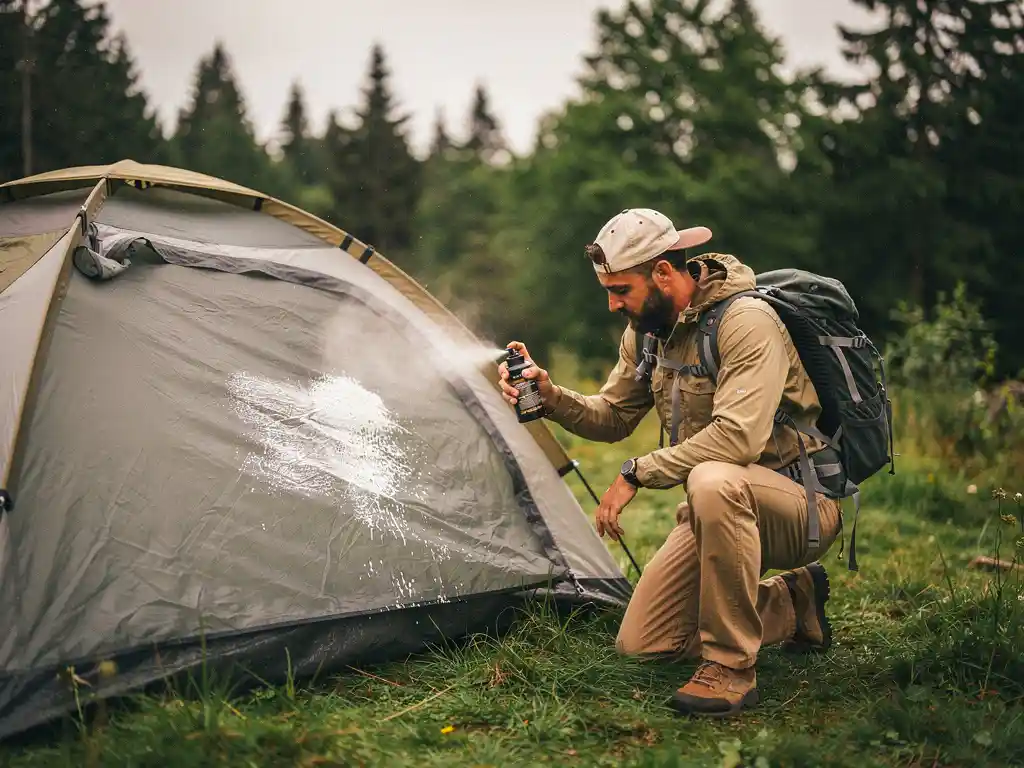
Yes, you can waterproof a tent whilst camping, but only if the fabric is completely dry. Damp or wet fabric does not absorb the waterproofing agent properly, meaning the treatment will have little effect. With the right preparation and a suitable product, waterproofing on site is perfectly possible.
This is useful to know if you find that your tent is losing its water-repellent properties whilst you’re out and about. In this article, we answer the most frequently asked questions about waterproofing your tent whilst on the go, from recognising the right moment to the drying time after treatment.
Can you waterproof a tent when it’s wet or damp?
No, you must not waterproof a tent if it is wet or damp. The waterproofing agent will not be able to penetrate the fabric fibres properly, meaning the water-repellent layer will adhere unevenly or not at all. The result is a treatment that flakes off quickly or simply offers no protection.
Always wait until the tent fabric is completely dry before you start waterproofing it. On a sunny day at the campsite, this may be the case after just a few hours. Also check the seams and overlapping sections of the fabric, as these take longer to dry than the flat sections.
An exception to this are certain special impregnating agents that have been specifically developed for use on damp materials. Always read the product instructions carefully before you start, as not every product works in the same way.
How do you know if your tent needs waterproofing?
Your tent needs waterproofing when rainwater no longer beads up and rolls off the fabric, but soaks into the material. This phenomenon is known as the loss of the “lotus effect”. A simple test: splash a little water onto the fabric. If it soaks in straight away instead of rolling off, it’s time to make the fabric water-repellent.
Other signs that your tent needs waterproofing:
- The fabric feels heavy and damp after the rain
- Dark patches appear on the tent fabric during a rain shower
- The inside of the tent feels damp, even without any obvious leaks
- The fabric dries much more slowly than usual after rain
How quickly your tent loses its water-repellent properties depends on how intensively you use it, how often you clean it and how it is stored. A tent that you use for several weeks every year and wash regularly will need re-waterproofing more often than one you only take out occasionally.
Which waterproofing products are suitable for use at the campsite?
Waterproofing sprays are the most practical option for use at the campsite. They are easy to carry, quick to apply and require no additional tools. Choose a product that is suitable for the material of your tent, such as canvas, polyester or nylon, and which is water-resistant to rain once dry.
When choosing a wood preservative, bear the following points in mind:
- Material suitability: Check whether the product is suitable for your type of tent fabric
- Ready to use or dilute: Products that you can use straight away without diluting them are more convenient on site
- Drying time: Choose a product with a short drying time if you want to get back to camping quickly
- Odour and safety: Some products have a strong smell or contain solvents that you should avoid using in an enclosed space
Avoid using general-purpose household waterproofing products that are not specifically designed for tent fabric. These can corrode the material or damage the coating, which, in the long run, does more harm than good.
How do you waterproof a tent step by step whilst out and about?
Waterproofing your tent at the campsite works best if you clean the fabric first, let it dry completely, and then apply the waterproofing agent evenly. The whole process is easy to carry out without any special equipment, as long as you follow the steps in the correct order.
Follow this step-by-step guide to waterproofing your tent on site:
- Clean the cloth: Remove dirt, green deposits and dust using a suitable tent shampoo or a soft brush and water. Do not leave any soap residue behind.
- Leave the cloth to dry completely: Wait until the tent fabric is dry, including the seams. This may take several hours, depending on the weather.
- Pitch the tent: Apply the waterproofing agent to a tent that has been pitched, so that you can treat the fabric evenly and ensure that no creases are missed.
- Apply the waterproofing agent: Spray the product in even strokes over the entire surface. Pay particular attention to seams, corners and areas that are exposed to a lot of rain.
- Leave to dry: Allow the product time to soak in and set. Please refer to the product instructions for the exact drying time.
It is best to carry out this work on a dry, windless day. Wind speeds up the drying process but can also cause the product to be applied unevenly to the fabric. Direct sunlight during application is not ideal, as the product will dry too quickly before it has been properly absorbed.
How long does it take for a waterproofed tent to dry out?
In normal summer weather, a waterproofed tent takes an average of two to four hours to dry. The exact drying time depends on the product used, the temperature, the humidity, and whether the tent is in the sun or shade. In cool, cloudy weather, it may take longer.
Please note the following:
- Most wood preservatives are touch-dry after two hours, but only become fully effective after 24 hours
- For maximum protection, it is best to wait until the next day before using the tent
- At temperatures below 10 degrees, the product dries considerably more slowly
- Always check the product information, as drying times vary depending on the brand and formula
If you’re waterproofing your tent at the campsite and rain is forecast for that evening, it’s a good idea to do it early in the day. That way, the product has plenty of time to dry and set before it’s really put to the test.
Is waterproofing at the campsite a permanent solution?
No, waterproofing at the campsite is not a permanent solution. It is a temporary treatment that restores the water-repellent properties, but which will wear off again over time due to rain, sun, use and cleaning. How long the treatment lasts depends on the quality of the product and the intensity of use.
Think of waterproofing as part of regular maintenance, much like conditioning leather or servicing a bicycle. A tent that you use regularly will need to be waterproofed every year, or even every season. A tent that you use less frequently can go longer between treatments.
For long-lasting results, it is important to clean the fabric thoroughly before applying the waterproofing treatment. Dirt, grease and grime reduce the effectiveness of the waterproofing agent. A clean fabric absorbs the product better, resulting in a stronger and more durable water-repellent layer.
How Rokimi helps with tent waterproofing
Here at Rokimi, we have developed a comprehensive range of products specifically designed for the care of tent fabric, boat covers and other outdoor equipment. Whether you want to clean your tent before applying a waterproofing treatment, or make the fabric water-repellent straight away, we have the right products for every step.
What we offer for waterproofing your tent:
- Hood & Tent Shampoo: for thoroughly cleaning your tent fabric in preparation for the waterproofing treatment
- Heavy Duty Cleaner: for stubborn stains, green deposits and ingrained dirt that won’t come out with ordinary shampoo
- Hood & Tent Protection: our most effective waterproofing treatment of its kind, suitable for canvas, polyester and nylon, ready to use and easy to apply on site
All products are ready to use and do not need to be diluted, making them ideal for use when camping. They are designed to penetrate deep into the fibres for long-lasting results.
View our full Rokimi's product range or find out which Applications for our products are suitable. Want to find out more? Visit rokimi.com for all information on tent and fabric care.
Frequently Asked Questions
Can I waterproof my tent without cleaning it first?
It is strongly advised not to waterproof your tent without cleaning it first. Dirt, dust and mould block the fibres of the fabric, preventing the waterproofing agent from penetrating and bonding properly. A clean fabric absorbs the product much better, resulting in a stronger and longer-lasting water-repellent layer. So always take the time to clean the fabric thoroughly first, even when you’re on site.
What if I accidentally apply too much waterproofing agent to one spot?
If you have sprayed too much product in one spot, you can wipe off the excess immediately with a clean, dry cloth or sponge before it dries. Then allow it to dry evenly. A layer that is too thick will dry unevenly and may leave marks or a sticky surface. If in doubt, you can apply a second, thin coat over the entire surface after drying to ensure an even finish.
Do I need to waterproof the inside of the tent as well?
No, in most cases you do not need to waterproof the inside of the tent. The water-repellent treatment is designed for the outside of the tent fabric, so that rain beads up and rolls off immediately. The inside of a tent usually has a separate coating or is made of a breathable material, and applying waterproofing to the inside can negatively affect ventilation and moisture regulation.
How should I store the waterproofing agent after using it at the campsite?
After use, store the impregnating agent in a cool, dry place away from direct sunlight and out of the reach of children. Ensure the cap is tightly closed to prevent the product from drying out or leaking. Most spray products have a shelf life of up to a year or more after opening, provided they are stored correctly. Always check the expiry date and storage instructions on the packaging for the best results when using the product again.
Can I waterproof a tent that hasn’t been treated for years?
Yes, that is possible, but you should expect it to require more preparation. A tent that hasn’t been waterproofed for a long time will often have built up more dirt and grime, which must first be thoroughly removed. If the tent fabric is very old, a single treatment may not be sufficient; in that case, it is advisable to apply a second coat after the first drying period. Also check whether the fabric itself is still in good condition, as waterproofing does not repair tears or damaged coatings.
Does waterproofing also work on the seams of my tent?
Waterproofing improves the fabric’s water-repellency, but it is no substitute for seam sealing. A tent’s seams are the most vulnerable points for water ingress and require a specific seam sealer for optimal protection. When waterproofing, do pay extra attention to the seams by applying a little more product there, but also use a separate seam sealer if the seams are actually leaking.
How often should I waterproof my tent if I use it a lot?
If you use your tent intensively – for example, if you go camping for several weeks each year – it is advisable to waterproof it at least once a season. In the meantime, carry out a water test: splash some water onto the fabric and check whether it beads up. If the water no longer beads up properly, it is time for a new treatment, regardless of when you last treated it. Regular maintenance prevents the fabric from deteriorating significantly and considerably extends the life of your tent.
Related Articles
- Hoe impregneer je een tent met groene aanslag die al gereinigd is?
- Is waterproofing spray sufficient for a heavily used tent?
- How should you care for your tent fabric after long-term storage?
- Can you treat all types of tent canvas in the same way?
- What products do you use for tent canvas aftertreatment?