


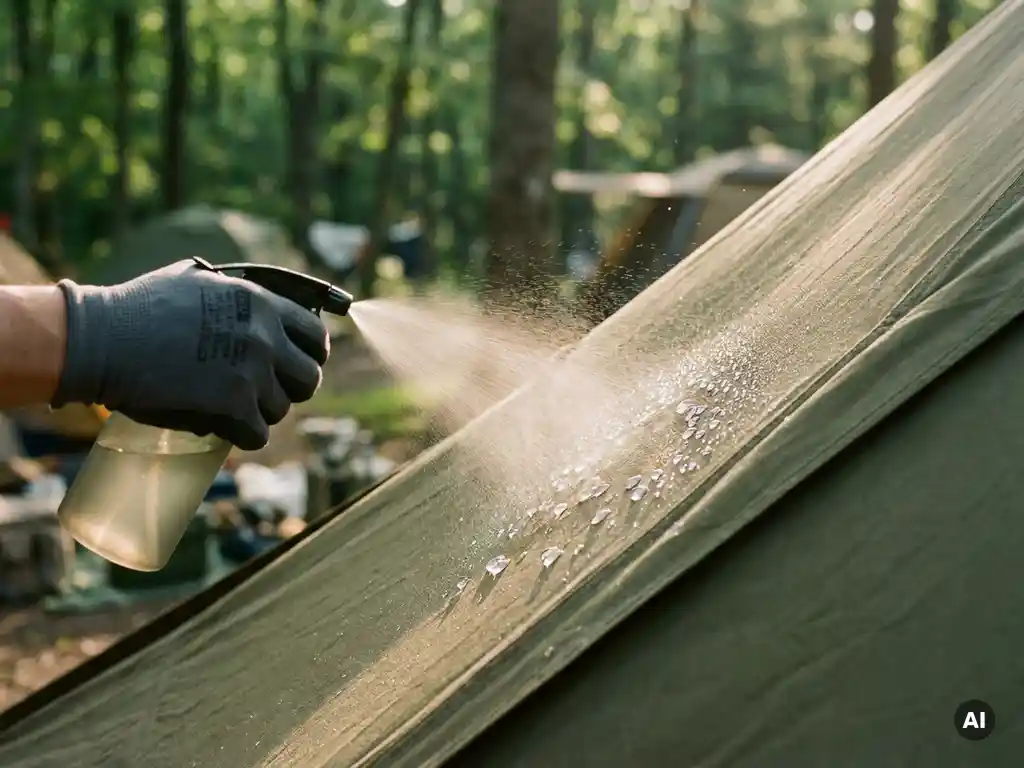
After cleaning your tent fabric, there is one more important step that many campers overlook: re-impregnating it. Without this step, your tent will lose its water-repellent properties, and you’ll only realise this when it’s too late – in the middle of a downpour at the campsite. Fortunately, waterproofing your tent fabric after cleaning is a simple process that you can carry out at home, provided you follow the correct procedure.
In this guide, we’ll walk you through, step by step, how to properly waterproof your tent fabric after cleaning, from preparation to the final check. Follow the steps in the correct order and your tent fabric will be ready for the new season.
What you need for waterproofing
Before you start, make sure you have everything within easy reach. Proper tent fabric maintenance depends entirely on the right preparation. Don’t go looking for materials halfway through, as the waterproofing agent must be applied immediately and evenly.
- A high-quality waterproofing treatment suitable for your type of fabric (canvas, polyester or nylon)
- A clean sponge, soft brush or spray bottle for application
- Clean water for any subsequent treatment
- A dry, well-ventilated workspace or a sunny outdoor location
- Protective gloves
- A clean, thoroughly washed tent fabric as a starting point
Also check the product instructions for your waterproofing agent for specific recommendations for your type of fabric. Some products work best on a slightly damp fabric, whilst others work best on a completely dry surface.
Check that the tent fabric is completely dry and clean
This is perhaps the most underestimated step when making a tent water-repellent. A waterproofing agent will only adhere properly if the fabric is free from dirt, soap residue and moisture. If you apply the treatment to a wet or inadequately cleaned fabric, it will not penetrate the fibres properly and the treatment will quickly lose its effectiveness.
- Visually check the cloth for stains, green deposits or soap residue. If any dirt is still visible, clean it again before continuing.
- Feel the fabric in several places, including the seams and corners. Damp patches aren’t always visible, but you can feel them.
- If necessary, allow the fabric to dry further on a drying rack or hung on a line, away from direct sunlight to prevent discolouration.
You’ll know the canvas is ready when it feels completely dry and there are no more discolourations or stains visible. Only then should you move on to the next step.
Ready for your next adventure?
Discover Rokimi’s professional cleaning and protection products and keep your tent fabric, awnings, boat covers and other outdoor equipment looking good for longer.
- ✓ Professional formula
- ✓ Specialist in cleaning & protection
- ✓ Certified quality
Apply the waterproofing agent evenly to the cloth
Once you have a dry, clean cloth as a base, it’s time to apply the water-repellent treatment. The key here is even application: an uneven application will result in patches where water is repelled and others where it isn’t, which you’ll only notice when it rains.
- Stretch the tent fabric as taut as possible so that you can reach the entire surface without any creases or folds.
- Start at a corner and work systematically across the canvas in overlapping strokes, so that you don’t miss any areas.
- Apply the product using a sponge, soft brush or spray bottle, depending on the type of product. Gently work the product in using circular movements.
- Pay particular attention to seams, corners and stitching lines, as these are the places where water penetrates most quickly.
Don’t use too much product at once. A thin, even layer works better than a thick blob that doesn’t soak in properly. After application, the fabric may appear slightly darker, which is normal.
Leave the impregnating agent to soak in and dry
Once applied, the chemical process really begins. The waterproofing agent must be given time to penetrate right into the fibres of the fabric. Do not rush this process, as putting the tent away or moving it too soon is one of the most common mistakes made when waterproofing tent fabric.
- Allow the fabric to dry for at least the time specified on the product packaging, which is usually between 24 and 48 hours.
- Ideally, leave it to dry in a warm, dry place with good air circulation. Avoid direct, strong sunlight during the first few hours of drying.
- Touch the fabric as little as possible whilst it is drying to avoid smudges or uneven patches.
Once dry, the fabric will feel slightly stiffer than usual. That’s a good sign: the product has set. Check that there are no areas where the product has dried into a whitish film, as you can gently wipe these away with a damp cloth.
Test the water-repellent properties before storage or use
Before you pack away the tent or take it with you on a trip, it’s a good idea to test its water-repellent properties. That way, you can be sure that the waterproofing has worked and you won’t be in for any surprises.
- Pour or spray a small amount of water onto the cloth and see what happens.
- Well-waterproofed tent fabric allows water droplets to roll straight off, much like water on a waxed car.
- If the water is being absorbed into the cloth rather than running off, repeat the treatment on that specific area and leave it to dry again.
A successful test looks like this: the water beads up on the surface and rolls off without being absorbed. If there are any areas that do not perform as well, applying a second coat of waterproofing agent to those areas will solve the problem. Only once the test has been passed is your tent ready for use or storage.
Common mistakes when waterproofing tent fabric
Even with the best of intentions, things can sometimes go wrong. Here are the most common pitfalls when making a tent water-repellent, so you can avoid them.
- Apply to a damp or dirty cloth: The product does not adhere properly and loses its effectiveness quickly. Always clean and dry the cloth thoroughly first.
- Applying unevenly: Any areas you miss will become weak spots. Work systematically and pay extra attention to seams and corners.
- Allowing too little drying time: The product needs time to take effect. Patience is not a luxury here, but a necessity.
- Using the wrong product: Not every waterproofing agent is suitable for every type of fabric. Always check that the product is compatible with canvas, polyester or nylon.
- Skip the test: Without a final check, you won’t know whether the treatment has worked. Always test it before you put the tent away or use it.
By being aware of these mistakes and avoiding them, you’ll get the most out of every treatment and your tent fabric will last considerably longer.
How Rokimi helps with tent canvas waterproofing
We understand how important it is that your tent fabric is not only clean, but also fully protected when you head out into the great outdoors. That’s why we’ve developed a comprehensive range specifically tailored to campers who want the very best for their kit.
- Hood & Tent Protection: Our most effective waterproofing treatment, developed for canvas, polyester and nylon, which ensures long-lasting water repellency after cleaning.
- Hood & Tent Shampoo: For regular cleaning of green deposits and light soiling, so that the fabric is ready for waterproofing.
- Heavy Duty Cleaner: For stubborn stains and heavy soiling that require a more vigorous approach before you can waterproof the surface.
- All products are ready to use, do not need to be diluted and are suitable for both beginners and experienced campers.
- Our formulas penetrate right down to the fibres, providing thorough protection that lasts longer.
Would you like to know which product is best suited to your situation? Take a look at our full product range, discover all applications what our resources are suitable for, or go straight to the Rokimi website For more information. That way, you’ll always stay dry this camping season.
Everything you need for a clean and protected outdoor lifestyle.
Discover Rokimi’s range of professional cleaning and protection products.
VIEW ALL PRODUCTS →Frequently Asked Questions
How often should I re-impregnate my tent fabric?
This depends on how often you use the tent and the weather conditions it is exposed to. As a rule of thumb, you should waterproof it after every thorough clean and, in any case, at the start of each new camping season. If, whilst using the tent, you notice that water no longer beads up but soaks into the fabric, it’s time for another treatment, even if you haven’t washed the tent.
Can I waterproof my tent without cleaning it first?
This is strongly discouraged. Dirt, grease, green deposits and soap residue block the fibres of the fabric, preventing the waterproofing agent from adhering properly and causing the treatment to lose its effectiveness quickly. Always clean the tent fabric thoroughly first using a suitable cleaning product such as Hood & Tent Shampoo or Heavy Duty Cleaner, and allow it to dry completely before you start waterproofing.
What should I do if the waterproofing agent leaves white marks on the fabric?
White patches or a whitish haze are a sign that the product has been applied too thickly or has not been worked in evenly. Gently wipe the affected areas with a slightly damp, clean cloth as soon as the fabric is dry. Then allow it to dry completely again and carry out a water test to check whether the impregnation is still effective in those areas. If necessary, apply a thin, additional coat.
Does it matter whether I use a spray, a sponge or a brush to apply the product?
For large, flat surfaces, a spray bottle works quickly and efficiently, but make sure you work the product in gently afterwards to ensure even coverage. A sponge or soft brush gives you more control and is ideal for seams, corners and stitching lines where you want to pay extra attention. Whichever method you choose, the most important thing is to work systematically and not to miss any spots.
Can I waterproof my tent even if it’s already pitched at the campsite?
That is technically possible, but not ideal. Outdoors, you have less control over conditions such as wind, dust and direct sunlight, all of which can have a negative effect on the adhesion of the waterproofing agent. Waterproofing at home, before you set off, gives you the time and space to do it thoroughly and evenly and to allow for the correct drying time of 24 to 48 hours.
Is the waterproofing treatment also suitable for other camping equipment, such as an awning or a rucksack?
Many waterproofing products suitable for tent fabric can also be used on other outdoor textiles, such as awnings, rucksacks, bags and jackets, provided the material is similar (canvas, polyester or nylon). Always check the product description and test the product first on a small, inconspicuous patch of fabric. Rokimi’s Hood & Tent Protection is highly versatile; see the applications page for a full overview.
How do I store my waterproofed tent properly so that the waterproofing lasts as long as possible?
Always store your tent in a dry, well-ventilated area, preferably loosely rolled up or in a breathable bag rather than an airtight plastic bag. Damp and mould are the biggest enemies of a waterproofed fabric and can damage the water-repellent coating. Also, make sure the tent is completely dry before you store it, even after a rainy camping trip, as storing damp tent fabric significantly accelerates the breakdown of the waterproofing.
Related Articles
- Which waterproofing treatment works best for tent fabric?
- How do you choose the right waterproofing treatment for your type of fabric?
- What is the best way to waterproof canvas outdoors?
- What is the difference between Heavy Duty Cleaner and ordinary shampoo?
- What is the difference between impregnation and waterproofing?