





You should choose the right impregnating agent for your type of fabric based on the material and its intended use. Canvas requires a different approach to polyester or nylon, and the conditions to which the fabric is exposed also play a part. In this article, we answer the most frequently asked questions about fabric waterproofing, so that you know exactly what you need.
Which type of fabric requires which type of waterproofing?
The type of waterproofing treatment you need depends entirely on the material of your fabric. Canvas has a different fibre structure to polyester or nylon, and not every waterproofing agent penetrates all these materials in the same way. Always choose a product that is suitable for your specific type of fabric to ensure optimum water repellency.
Canvas is a heavier, naturally woven fabric that responds well to waterproofing treatments which penetrate deep into the fibres. When waterproofing canvas, it is important that the treatment keeps the fabric supple whilst making it waterproof, without compromising its breathability.
Polyester and nylon are synthetic materials with a smoother surface. These types of fabric are naturally less absorbent, but lose their water-repellent coating over time due to use, washing and exposure to UV radiation. A good waterproofing agent effectively restores this coating.
For mixed materials, such as a polyester fabric with a PU coating, it is advisable to read the product description of the impregnating agent carefully. Not every product is suitable for coated materials, as the coating itself already acts as a barrier.
What is the difference between silicone and fluoropolymer impregnating agents?
Silicone impregnating agents make the fabric surface water-repellent by forming a film on the fibres, whilst fluoropolymer impregnating agents penetrate deeper into the fibre structure and repel both water and stains. For outdoor fabrics that are subject to heavy use, fluoropolymer formulations generally perform better and last longer.
Silicone waterproofing agents are often cheaper and quick to apply. They work well on canvas and provide visible water repellency. The downside is that they are less durable and need to be reapplied regularly, particularly on canvases that are frequently exposed to rain and sun.
Fluoropolymer waterproofing agents offer a broader spectrum of protection. Not only do they repel water, but dirt and oils are less likely to adhere to the treated fabric. This makes long-term maintenance easier. For tent waterproofing where you are looking for long-lasting protection, a fluoropolymer formula is often the better investment.
When making your choice, also consider environmental friendliness. Some fluoropolymer compounds are under scrutiny due to their environmental impact. An increasing number of manufacturers are offering alternatives that deliver comparable performance without harmful substances.
Ready for your next adventure?
Discover Rokimi’s professional cleaning and protection products and keep your tent fabric, awnings, boat covers and other outdoor equipment looking good for longer.
- ✓ Professional formula
- ✓ Specialist in cleaning & protection
- ✓ Certified quality
Do you need to clean the fabric before you waterproof it?
Yes, you must always clean the fabric thoroughly before applying the impregnating agent. Dirt, green deposits and grease on the fabric’s surface prevent the impregnating agent from penetrating the fibres properly. Impregnating an uncleaned fabric results in uneven treatment and a shorter duration of protection.
This is one of the most common mistakes made when making a tent water-repellent. If there is dirt or biofouling on the fabric, the impregnating agent adheres to that layer rather than to the fibres themselves. The result is a superficial coating that wears off quickly.
The cleaning process doesn’t have to be complicated. First remove any loose dirt and dust, then treat any stains or green deposits with a suitable cloth shampoo, and allow the fabric to dry completely before applying the waterproofing agent. Working on a dry cloth ensures better absorption of the product.
For stubborn dirt, such as dried-on mud or black streaks, a more powerful cleaner is needed that penetrates deep into the fibres. Only then is the fabric ready for an effective waterproofing treatment.
How long does a waterproofing treatment remain effective on tent fabric?
A waterproofing treatment remains effective on tent fabric for one to two seasons on average, depending on the quality of the product, the intensity of use and exposure to the elements. Fabrics that are frequently exposed to the sun or regularly get wet lose their waterproofing more quickly.
UV radiation is one of the biggest enemies of a tent treated with a waterproofing spray. Sunlight slowly breaks down the active ingredients in the waterproofing, causing the water-repellent properties to gradually diminish. The same applies to mechanical stress, such as folding and unfolding a tent.
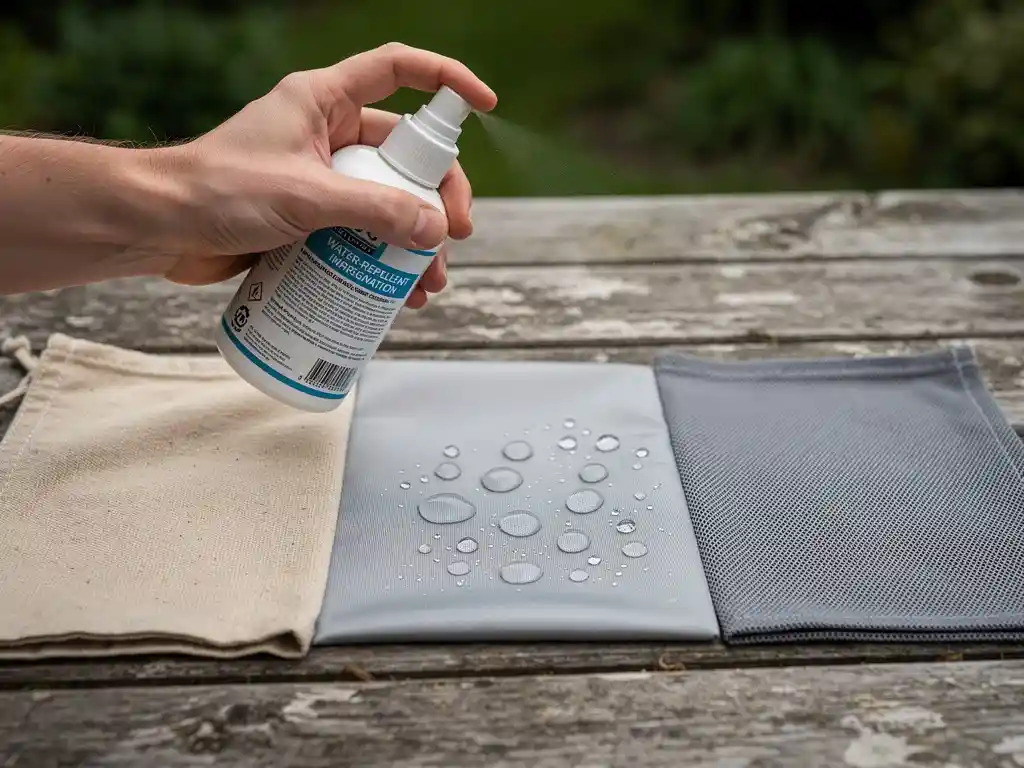
A simple way to check whether the fabric is still sufficiently waterproofed is the water droplet test. Splash a few drops of water onto the fabric. If the water forms beads and rolls off the surface, the waterproofing is still effective. If the water soaks into the fabric and leaves a dark stain, it is time for a new treatment.
If the tent is used intensively – for example, on several camping trips a year or during prolonged exposure to rain – it is advisable to check its water-repellency at the start of each season and to re-treat the fabric if necessary.
Can you also use a waterproofing treatment for tents on boat covers and convertible roofs?
Many waterproofing agents suitable for tent fabric can also be used on boat covers and convertible roofs, provided the product is suitable for the specific material. Canvas boat covers and soft-top convertible roofs are made from fibres similar to those used in tent fabric and benefit from the same water-repellent treatment.
The main difference lies in the stresses to which boat covers and convertible tops are subjected. They are often left in the sun for long periods, are exposed to salty air and are regularly folded and unfurled. This means that the waterproofing wears out more quickly and needs to be reapplied more often than on a tent that is only used during the camping season.
Always check the product specifications of the waterproofing treatment. Some products are specifically formulated for tent fabric and are less suitable for the harsher conditions of marine use. In most cases, a universal waterproofing treatment for outdoor textiles offers the greatest flexibility.
When is the best time to waterproof your tent or canvas?
The best time to waterproof your tent or canvas is at the start of the camping season, after you have thoroughly cleaned the fabric. By waterproofing it in the spring, you ensure that your kit is optimally protected throughout the summer. A second treatment at the end of the season, just before storage, provides extra protection during the winter months.
In practical terms, it is best to apply the waterproofing on a dry day when the temperature is between 10 and 25 degrees Celsius. Too cold a temperature slows down the drying time and may affect how well the waterproofing agent adheres. Direct sunlight whilst applying the product is also not ideal, as it causes the product to dry too quickly before it has been properly absorbed into the fibres.
Always apply the waterproofing treatment to a clean, dry fabric. If possible, pitch the tent so that the fabric is fully taut and you don’t miss any creases. Once applied, allow the product to dry completely before folding up or storing the tent.
At the end of the season, it’s certainly worth considering an extra treatment, particularly if your tent has been used intensively during the camping season or has got wet on several occasions.
How Rokimi helps with waterproofing your canvas
Here at Rokimi, we have developed a comprehensive range of products specifically designed for the care of outdoor textiles. Whether you want to treat an awning, a dome tent, a canopy, a boat cover or a convertible roof, our products offer a complete solution for every type of fabric.
- Hood & Tent Shampoo: Effectively removes green deposits, dust and light soiling from canvas, polyester and nylon, leaving the fabric ready for waterproofing.
- Heavy Duty Cleaner: for stubborn stains such as mud, grass stains and black streaks that have penetrated deep into the fibres.
- Hood & Tent Protection: the most effective waterproofing agent of its kind, which makes the cleaned fabric optimally water-repellent and protects it against rain, damp and dirt.
All products are ready to use, do not need to be diluted and are suitable for both experienced campers and beginners. They work on canvas, polyester and nylon, and can also be used on boat covers and convertible roofs.
View our full product range or find out which applications our products are suitable for. Get started straight away and keep your kit in top condition via rokimi.com.
Everything you need for a clean and protected outdoor lifestyle.
Discover Rokimi’s range of professional cleaning and protection products.
VIEW ALL PRODUCTS →Frequently Asked Questions
Can I apply a water-repellent treatment to a wet fabric?
It is strongly advised not to apply a water-repellent treatment to a wet fabric. Moisture in the fibres prevents the product from being absorbed properly, resulting in uneven and less durable protection. Always allow the fabric to dry completely after cleaning before you start applying the water-repellent treatment. Some products claim to be suitable for slightly damp fabrics, but for the best results, a dry fabric is always the safest choice.
How do I know if my fabric has already been factory-treated and whether I need to treat it again?
New tents and canvases often come with a factory-applied water-repellent treatment, but this is rarely durable enough to last for several seasons. Carry out the water droplet test: if water no longer beads up but soaks into the fabric and leaves a dark mark, the waterproofing has worn off and a new treatment is needed. It is also advisable to check the water repellency after the first use in heavy rain. Don’t take any risks – treat the fabric preventatively at the start of each season.
Can I waterproof a cloth too often, and is that harmful?
Waterproofing too often is generally not harmful, but it is also unnecessary as long as the water-repellent properties are still working properly. Unnecessary treatments simply lead to extra costs and product wastage. Use the water droplet test as a guide: re-treat the fabric as soon as water no longer beads up. With intensive use, such as several camping trips per season, this may be twice a year; for occasional use, one treatment per year is sufficient.
What should I do if the waterproofing agent leaves stains on my cloth?
Stains after waterproofing are usually caused by an uneven application of the product, or because the product dried too quickly before it could be properly absorbed into the fibres. In this case, reapply the product to the affected areas and spread it evenly with a soft brush or sponge. For the next treatment, make sure you work in the shade on a day that isn’t too hot, and apply the product in thin, even layers. Allow the fabric to dry completely before folding it.
Is it necessary to wash or rinse the fabric after waterproofing it?
No, once you’ve applied a waterproofing agent, you don’t need to rinse or wash the fabric. Rinsing would actually remove or damage the protective layer you’ve just applied. Simply leave the product to dry completely in accordance with the instructions on the packaging; this usually takes a few hours, depending on the temperature and humidity. Only then is the fabric ready for use or storage.
Can I combine a waterproofing treatment with a UV-protective product?
Yes, some waterproofing agents already contain built-in UV protection, but you can also use separate UV-protective products as a supplement. Always check that the products are compatible and apply them in the correct order: clean first, then waterproof, and apply a UV protector afterwards if necessary. Combined protection is particularly recommended for fabrics that are exposed to direct sunlight for long periods, such as awnings, boat covers and convertible tops, as UV radiation accelerates the breakdown of the waterproofing.
What is the best way to store an impregnated cloth during the winter?
It is best to store an impregnated cloth in a cool, dry place, away from direct sunlight, ensuring it is dry, clean and loosely rolled up or folded. Make sure the fabric is completely dry before storing it, as moisture during storage can lead to mould growth, which damages the fibres and the waterproofing. An additional impregnation treatment at the end of the season provides extra protection during the winter months. Check the fabric again at the start of the new season using the water droplet test before putting it back into use.
Related Articles
- How do you check whether a tent needs re-waterproofing?
- How should you store a tent after waterproofing it to ensure the protection is maintained?
- Can you repair a damaged tent fabric by waterproofing it?
- How should you care for your tent fabric after long-term storage?
- What factors influence the effectiveness of tent fabric impregnation?