


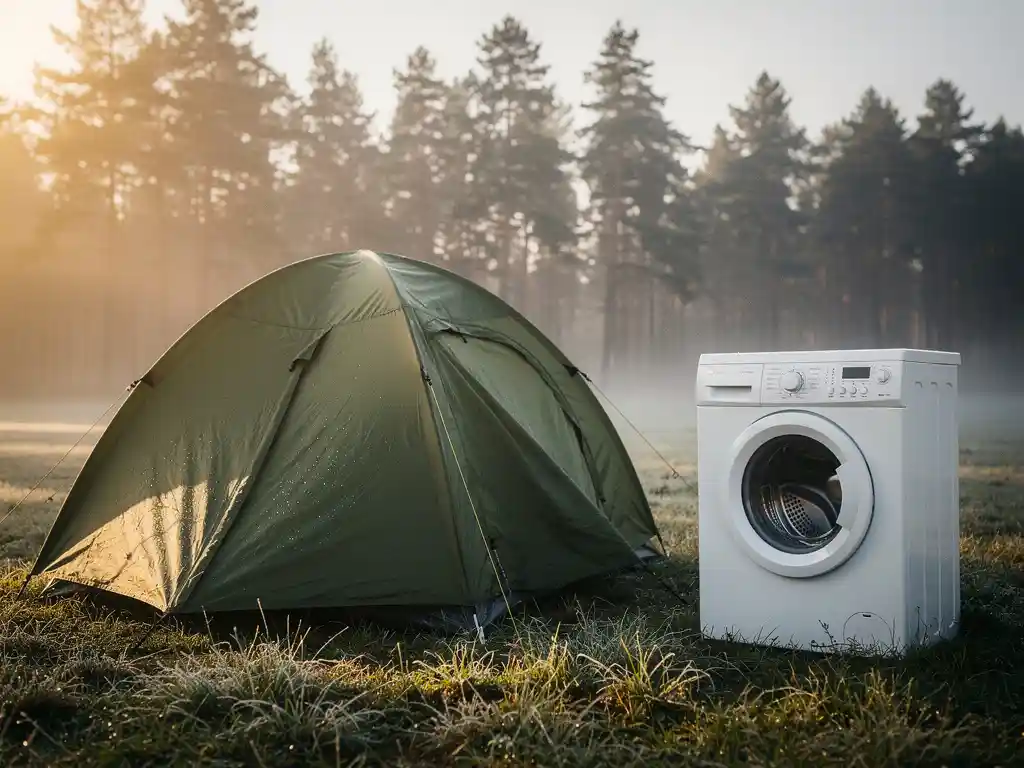
No, you cannot waterproof a tent in the washing machine. Waterproofing in the washing machine is not effective and may actually damage your tent. The waterproofing agent is rinsed out before it has a chance to soak in properly, and the mechanical action of the drum damages the fabric’s coating. In this article, we explain why this is the case and how you can make your tent water-repellent correctly.
What happens to your tent if you waterproof it in the washing machine?
If you waterproof a tent in the washing machine, most of the waterproofing agent is washed away by the water and the spin cycle before it can penetrate the fibres. The result is a fabric that has received little or no protection, whilst you have run the risk of damaging the existing coating.
A water-repellent treatment needs time and space to penetrate deep into the fibres of the fabric and set there. In the washing machine, the treatment is immediately diluted and washed away. Furthermore, the mechanical friction of the drum, combined with water, acts as an abrasive on the existing DWR (Durable Water Repellency) coating, which is precisely what gives your tent fabric its water-repellent properties.
There is also a risk that the seam sealing on your tent could come loose due to the movement inside the drum. On more expensive tents, these seams are professionally glued or taped, and once damaged, they are difficult to repair. In short: waterproofing your tent in the washing machine will cost you money, time and, potentially, your tent.
Can you actually wash a tent in the washing machine?
For most tents, washing in a washing machine is strongly discouraged. The combination of water, friction and the spin cycle is too harsh for tent fabric made of canvas, polyester or nylon. Seam tape, coatings and zips may be damaged, and the structure of the fabric itself may become distorted.
There are a few exceptions. Small, lightweight tents made of polyester or nylon can sometimes be washed on a very gentle cycle (30 degrees, no spin, using a special outdoor detergent). But even then, always check the manufacturer’s washing instructions. Canvas tents, awnings and large tunnel tents should never be put in the washing machine.
The safest and most effective approach is manual cleaning. This allows you to control the pressure, the product and the way you handle the fabric, without subjecting the material to potentially damaging mechanical forces.
Ready for your next adventure?
Discover Rokimi’s professional cleaning and protection products and keep your tent fabric, awnings, boat covers and other outdoor equipment looking good for longer.
- ✓ Professional formula
- ✓ Specialist in cleaning & protection
- ✓ Certified quality
So how do you waterproof a tent properly?
To waterproof a tent properly, lay the cleaned, damp fabric outside or in a well-ventilated area and apply the waterproofing agent evenly using a spray bottle or sponge. Leave the treatment to soak in and dry without rinsing it off. This is the only step-by-step guide to waterproofing a tent that really works.
Follow these steps for best results:
- First, clean the cloth thoroughly. There’s little point in applying the impregnating treatment to a dirty fabric. Dirt and green deposits block the pores, preventing the treatment from being properly absorbed. Use a suitable tent shampoo for light soiling or a more powerful cleaner for stubborn stains.
- Rinse thoroughly and leave the cloth damp. A slightly damp cloth absorbs the impregnating agent better than a bone-dry one. Do make sure there are no traces of soap left on the cloth.
- Apply the waterproofing agent evenly. Work in sections and make sure you don’t miss any areas, paying particular attention to seams, corners and high-wear areas.
- Leave it to dry completely. Leave the cloth to dry in a place out of direct bright sunlight. Some products work better when exposed to gentle heat, but direct UV radiation can reduce their effectiveness.
- Test the water repellency. Sprinkle a little water onto the fabric. If it beads up and rolls off, the waterproofing has worked properly. If the water soaks into the fabric, repeat the treatment.
When is waterproofing necessary, and how can you tell?
Your tent needs re-waterproofing when rainwater no longer beads up and rolls off the fabric, but soaks in. This phenomenon is called “wetting out” and means that the water-repellent coating has worn off. You’ll notice this because the fabric darkens when it rains and starts to let water through, or feels heavy.
Practical signs that your tent needs to be made water-repellent:
- Rainwater seeps through the outer wall instead of running off
- The fabric feels wet and heavy after the rain
- There are damp patches visible on the inside of the tent
- The fabric has been washed without any after-treatment
- The tent has been used intensively for a whole season without any maintenance
As a rule of thumb, you should waterproof your tent at least once a year, preferably at the start of the camping season. After a thorough clean, it is always advisable to treat it with a waterproofing agent, as washing further reduces the remaining coating. Anyone who stores their tent away in the autumn would be well advised to ensure it is both clean and waterproofed before putting it away.
Which waterproofing treatment works best for tent fabric?
The best waterproofing treatment for tent fabric is a product specifically designed for outdoor textiles such as canvas, polyester and nylon, which penetrates deep into the fibres rather than simply forming a surface layer. Generic sprays from DIY stores are often less suitable because they are not tailored to the flexibility and porous structure of tent fabric.
When choosing a fabric waterproofing agent, please bear the following points in mind:
- Material compatibility: Check whether the product is suitable for canvas, polyester and nylon, depending on the material your tent is made of.
- Ease of use: It is best to choose a ready-to-use product that does not need to be diluted, so that you are always guaranteed the correct concentration.
- Depth of effect: A good impregnating agent penetrates right into the fibres and does not form a brittle surface film that flakes off quickly.
- Long-lasting protection: High-quality products offer protection that lasts for several seasons under normal use.
Avoid using silicone-based products on fabric that you intend to glue or repair later, as silicone hinders the adhesion of repair materials. Water-based formulas are generally gentler on the material and the environment.
How Rokimi helps with waterproofing your tent
At Rokimi, we specialise exclusively in the care of outdoor textiles. Our range has been specifically developed for campers who want to keep their tent, awning or canopy in top condition, without any complicated hassle or the risk of damage.
What we offer to ensure your canvas is properly waterproofed:
- Hood & Tent Shampoo: For pre-cleaning. Removes green deposits and light soiling without damaging the coating.
- Heavy Duty Cleaner: For stubborn stains and ingrained dirt that ordinary shampoo can’t tackle.
- Hood & Tent Protection: Our most powerful waterproofing treatment, specially developed for canvas, polyester and nylon. It penetrates deep into the fibres and makes your fabric water-repellent for the long term.
All products are ready to use, do not need to be diluted and are suitable for both beginners and experienced campers. View our full product range or read more about the applications for your specific kit. Ready to get your tent ready for the new season? Visit rokimi.com and find out which product suits your situation.
Everything you need for a clean and protected outdoor lifestyle.
Discover Rokimi’s range of professional cleaning and protection products.
BEKIJK ALLE PRODUCTEN →Frequently Asked Questions
How long does it take for the waterproofing treatment to be fully absorbed and for the tent to be ready for use again?
Drying time varies depending on the product and weather conditions, but on average you should allow 24 to 48 hours for the waterproofing agent to cure completely and provide optimum protection. This process may be quicker in mild warmth and with good ventilation. Do not use your tent until the fabric feels completely dry to the touch, to ensure that the water-repellent layer has had time to form properly.
Can I waterproof my tent even if it’s cold or damp outside?
Waterproofing in cold or damp weather isn’t ideal, but it is possible. Most waterproofing products work best at temperatures between 10 and 25 degrees Celsius and when the humidity isn’t too high. In freezing temperatures or rain, it is better to apply the waterproofing agent indoors in a well-ventilated room and then leave the fabric to dry outside as soon as conditions improve.
What is the difference between impregnation and waterproofing — aren’t they the same thing?
This is a common misconception: impregnation and waterproofing are not the same thing. Impregnation restores the water-repellent outer layer (DWR coating) of the fabric, so that rainwater beads up and rolls off rather than being absorbed. Waterproofing refers to the inner coating or membrane of the fabric that prevents water from penetrating. A tent needs both: a good DWR coating prevents the fabric from soaking up water and becoming heavy, whilst the inner coating ensures the actual waterproofing.
There’s a green film on my tent. Do I need to remove it first before I waterproof it?
Yes, it is absolutely essential to remove green deposits before waterproofing. Green deposits consist of algae and mould, which block the pores of the fabric, preventing the waterproofing agent from being properly absorbed. For best results, first treat the affected areas with a suitable cleaner, then rinse the fabric thoroughly and leave it slightly damp before applying the waterproofing agent.
How often should I waterproof my tent if I only use it a few times a year?
If you only use your tent a few times a year, one treatment per year is usually sufficient, preferably at the start of the season. Always carry out the water test: sprinkle a little water onto the fabric and check whether it beads up and runs off. If it doesn’t, a new treatment is needed, regardless of how often the tent has been used. Storing the tent in a damp or warm environment can also damage the coating, so be sure to check the tent after a long period of storage.
Can I also use a waterproofing agent on other camping equipment, such as an awning or porch?
Yes, a good waterproofing agent suitable for canvas, polyester and nylon can usually also be used on awnings, front tents, groundsheets and other outdoor textiles. However, always check the product description to ensure compatibility with the specific material. Awnings and front tents are often exposed to harsh weather conditions and sometimes even require more frequent maintenance than the tent itself.
What should I do if the waterproofing doesn’t seem to be working and the water is still soaking into the fabric?
If the water-repellency is disappointing after impregnation, there are a few possible causes. Firstly, the fabric may not have been clean enough before treatment, preventing the product from being properly absorbed. Secondly, it is possible that the fabric’s inner coating is so worn that impregnation alone is no longer sufficient — in which case, professional repair or replacement of the coating is required. First, try a second treatment following a thorough clean; if that does not help, the coating itself may need replacing.