


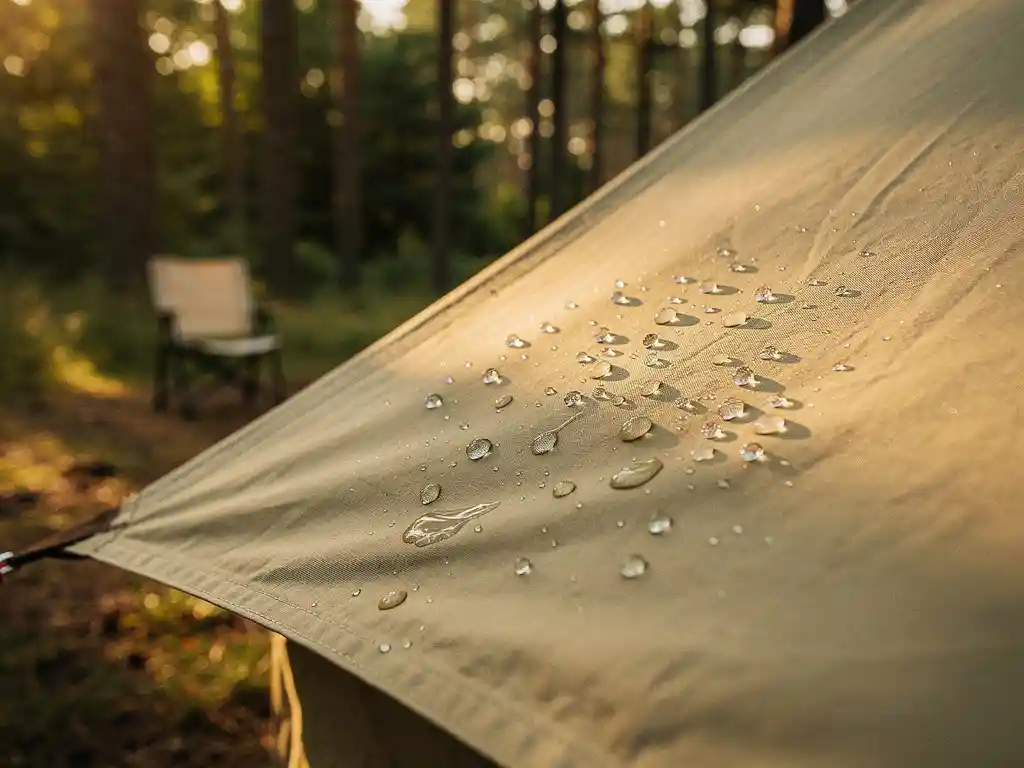
After waterproofing your tent, you should usually wait at least 24 hours before using the tent. In ideal conditions, with dry and sunny weather, the waterproofing treatment can be fully absorbed and dry within 4 to 8 hours. In cool or damp weather, this can take up to 48 hours or longer.
The exact drying time depends on the type of waterproofing agent, the weather conditions and the material your tent is made of. In the rest of this article, we’ll answer the most frequently asked questions about waterproofing tent fabric, so you’ll know exactly when it’s safe to use your tent.
How long does it take for the wood preservative to be fully absorbed?
A wood preservative is fully absorbed after an average of Leave to dry for 24 hours at normal outdoor temperatures and in dry weather. Under optimal conditions – such as temperatures above 15 degrees Celsius and direct sunlight – this can be reduced to 4 to 8 hours. Cool, cloudy or damp weather significantly extends the drying time.
The waterproofing agent works in two stages. First, the carrier (water or solvent) evaporates, leaving the fabric feeling dry. This is followed by a chemical curing stage during which the active ingredients bond with the fibres of the fabric. It is precisely this second stage that is crucial for effective water repellency. If the fabric feels dry but it has been less than 24 hours since treatment, the impregnating agent has probably not yet fully cured.
As a rule of thumb, the thicker the material, the longer it takes to dry. Canvas takes longer than polyester or nylon, as its thicker fibres require more time to fully absorb and set the agent.
What happens if you use the tent too soon after waterproofing it?
If you use the tent too early, you run the risk that the impregnating agent will not adhere properly on the fibres. The result is a tent that is less water-repellent than it could be, and you’ll need to re-waterproof it sooner. In the worst-case scenario, you’ll rinse some of the treatment out before it has fully set.
Specifically, the following problems may arise:
- The fabric absorbs water rather than repelling it, making the tent heavier and giving it a wetter feel on the inside
- The impregnating agent adheres unevenly, resulting in weak spots in the protective layer
- You will need to repeat the impregnation process sooner, which will take more time and incur additional costs
- With solvent-based products, residues may remain on the fabric which can run when they come into contact with rainwater
Patience really does pay off here. Waiting an extra day can make all the difference between a tent that stays waterproof for years and one that gets soaked after just a few showers.
Ready for your next adventure?
Discover Rokimi’s professional cleaning and protection products and keep your tent fabric, awnings, boat covers and other outdoor equipment looking good for longer.
- ✓ Professional formula
- ✓ Specialist in cleaning & protection
- ✓ Certified quality
What factors affect the drying time after impregnation?
The drying time after waterproofing your tent is determined by four main factors: temperature, humidity, wind and the type of impregnating agent. All these factors combine and can halve or double the drying time compared with the average of 24 hours.
Weather conditions
Heat and dry air speed up the evaporation process of the carrier in the impregnating agent. A sunny day with a light breeze is ideal. Rain or high humidity above 70 per cent significantly slows down the drying process, as the air is already saturated with moisture and there is little scope for further evaporation. Never waterproof your tent in the rain or if rain is forecast within 24 hours.
Type of material and thickness
Canvas and thick polyester absorb more impregnating agent and therefore take longer to dry than thinner nylon. Furthermore, the condition of the fabric is a factor: an old or worn fabric that has already absorbed a lot of moisture requires more agent and dries more slowly than a relatively new fabric.
Type of impregnating agent
Water-based wood preservatives generally take longer to dry than solvent-based varieties, but are gentler on the material and the environment. Spray-on impregnating agents often dry faster than liquid agents applied with a sponge or brush, as they are applied in a thinner layer.
How can you tell if the wood preservative has been properly absorbed?
You can check whether the wood preservative has been properly absorbed by to let a few drops of water fall onto the cloth. If the water immediately forms beads and rolls off the fabric, the impregnation has been successful. If the water is absorbed or spreads out across the fabric, the treatment has not been sufficiently absorbed or cured.
Other signs that the impregnation has been successful:
- The fabric feels light and supple, not stiff or sticky
- There are no white spots or streaks visible on the material
- The fabric no longer smells of the waterproofing agent
- The colour of the fabric is even, with no dark or damp patches
Not sure? Then wait one more night before pitching or packing away your tent. A few extra hours’ drying won’t cost you anything, but a poorly waterproofed tent could mean a wet camping weekend.
Do you need to clean the tent again after waterproofing it?
No, after waterproofing, you don’t need to do not clean again. Waterproofing is always the final step in maintaining your tent fabric; it is never an intermediate step. If you clean the tent after waterproofing it, you will remove some or all of the waterproofing agent, and the whole process will have been in vain.
The correct order for waterproofing a tent is always: clean first, then waterproof. Make sure the fabric is thoroughly clean and completely dry before applying the waterproofing agent. This is because dirt and grease on the fabric prevent the treatment from adhering properly to the fibres, which significantly reduces the effectiveness of the treatment.
If you still notice a stain after waterproofing, just leave it as it is until you give the tent a thorough clean next time. You can then waterproof it again as part of the next maintenance cycle.
How often should you re-waterproof a tent?
As a rule of thumb: Waterproof your tent at least once a year, preferably at the start of the camping season. If you use your tent a lot or expose it to a lot of rain, sun and wind, you may need to do this twice a year. This is because the water-repellent properties wear off due to use, cleaning and UV radiation.
You don’t need to wait for the calendar to tell you when it’s time. The water test gives you an immediate answer: let a few drops of water fall onto the fabric. If the drops no longer bead and the water is absorbed into the fabric, it’s time to re-waterproof it. This is a more reliable indicator than a fixed schedule, as the wear and tear on the waterproofing treatment depends heavily on usage and conditions.
Factors that increase the frequency of impregnation:
- The fabric needs to be cleaned frequently, as every wash reduces its water-repellent properties
- Prolonged exposure to direct sunlight, which causes the product to degrade due to UV radiation
- Use in extreme weather conditions such as heavy rain or storms
- Storing a cloth whilst it is still damp, which accelerates the formation of mould and causes the fabric to deteriorate
How Rokimi helps with waterproofing your tent
We understand that waterproofing a tent raises a number of questions, from the right preparation to choosing the best waterproofing product for your fabric. That’s why we’ve developed a comprehensive range that makes the whole process simple and effective, for canvas, polyester and nylon alike.
With our products, you can tackle the maintenance of your tent step by step:
- Cleaning: Hood & Tent Shampoo effectively removes green deposits, dust and light soiling in preparation for waterproofing
- Deep cleaning: The Heavy Duty Cleaner tackles stubborn stains, mud and ingrained dirt so that the waterproofing agent can adhere effectively
- Impregnation: Hood & Tent Protection is the strongest waterproofing treatment of its kind and makes your fabric permanently water-repellent and protected against the elements
- All products are ready to use and do not need to be diluted, which makes the process accessible to everyone
View our full product range or find out which applications our products are suitable for. Would you like to find out more about how to look after your outdoor gear properly? Then visit rokimi.com for practical tips and advice.
Everything you need for a clean and protected outdoor lifestyle.
Discover Rokimi’s range of professional cleaning and protection products.
BEKIJK ALLE PRODUCTEN →Frequently Asked Questions
Can I waterproof my tent whilst it’s pitched?
Yes, and that’s actually recommended. By waterproofing the tent whilst it’s pitched, the fabric is taut and you can cover all surfaces evenly, including the seams and corners that you’d otherwise easily miss. Do make sure the tent is in the shade whilst you’re applying the treatment, so that it doesn’t evaporate too quickly before it’s been properly absorbed. Once you’ve finished applying it, the tent can safely be left in the sun to dry.
What should I do if the waterproofing agent has been applied unevenly and there are visible patches?
White patches or streaks immediately after application are often a sign that the layer is too thick or has been applied unevenly. Whilst the product is still wet, you can wipe it out with a clean, damp cloth to distribute it more evenly. If it has already dried and the marks are still visible, wait until the next maintenance cycle: clean the fabric thoroughly and reapply a thinner, more even coat.
Can I waterproof a tent that’s slightly damp, or does it absolutely have to be bone dry?
The fabric must be as dry as possible before you start waterproofing it. A slightly damp fabric reduces the adhesion of the waterproofing agent, as the moisture present already occupies the fibres and prevents the agent from penetrating as deeply. If in doubt, always wait an extra hour or two until the fabric feels completely dry, including on the inside and along the seams.
Can I use a hairdryer or a heater to speed up the drying process after waterproofing?
This is not recommended. Direct sources of heat, such as a hairdryer or heater, can cause the waterproofing agent to evaporate too quickly, meaning it does not have time to soak properly into the fibres and set. Furthermore, high temperatures can damage or warp some synthetic materials, such as nylon. The best approach is still to allow the item to dry patiently on a warm, dry day with a light breeze.
Is there a difference between waterproofing a new tent and a tent that has already been used?
Yes, a second-hand tent usually requires more preparation. Whilst a new tent sometimes only needs a light refresh of the existing factory waterproofing, a second-hand tent must first be thoroughly cleaned to remove dirt, grease and old residues of the waterproofing agent. Never skip the cleaning step when dealing with a second-hand tent, as caked-on dirt and old layers will prevent the new waterproofing agent from adhering properly.
How should I store my tent after waterproofing it to ensure it remains water-repellent for as long as possible?
Always store your tent completely dry, loosely rolled up or folded, in a well-ventilated area, away from direct sunlight and damp. Storing it in a sealed plastic bag or in a damp place accelerates the growth of mould and damages the waterproofing treatment. A cotton or mesh storage bag is ideal, as it allows the fabric to breathe and prevents condensation.
Do I also need to treat the seams of my tent separately after waterproofing it?
The seams are often the weakest point in a tent’s waterproofing and deserve extra attention. Standard waterproofing treatment protects the fabric, but the seams themselves are made up of several layers of fabric and stitching that need to be treated separately with a seam sealer or seam tape. After waterproofing, always check that the seams are still properly sealed, and treat them with a specific seam sealer if necessary to ensure the best protection.
Related Articles
- How do you remove black mould stains from tent fabric?
- How do you treat the seams of your tent to make it more waterproof?
- How can you make a tent water-repellent without using expensive products?
- What products do you use for tent canvas cleaning?
- Can your tent fabric be damaged by improper impregnation?