


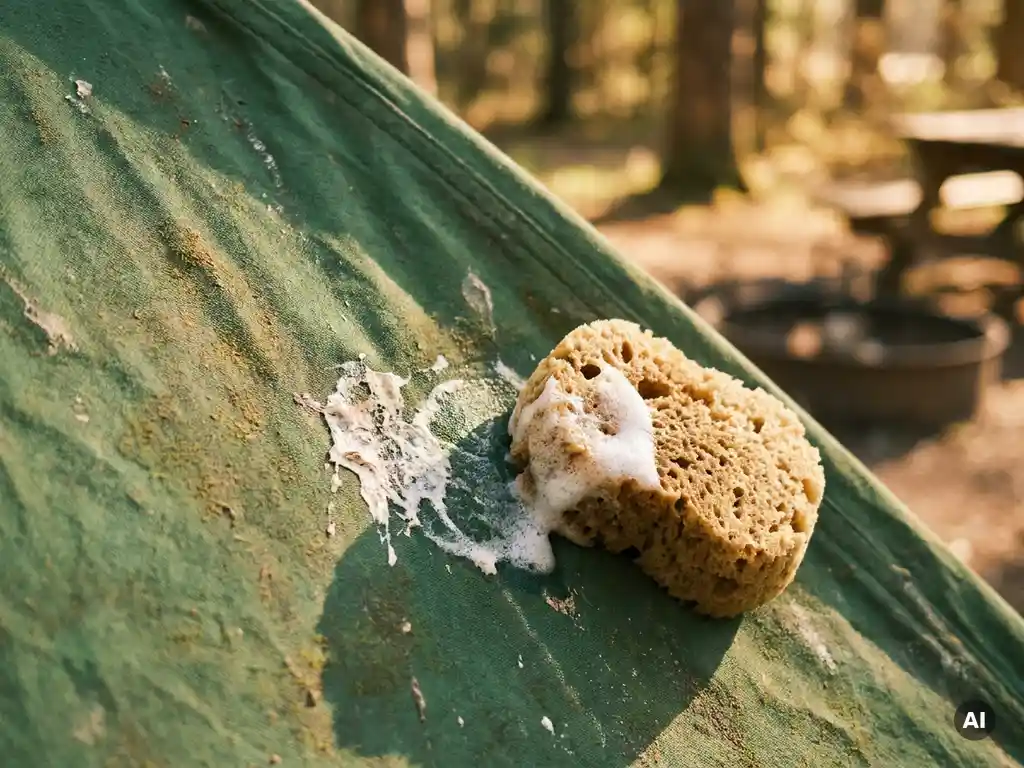
Bird poo on your tent fabric is one of those unpleasant surprises you come across after a night’s camping under the trees. When it’s fresh, it’s still relatively easy to wipe off, but dried-on bird poo on tent fabric is a different story. The acids in the droppings can damage the fabric if you leave them for too long, and if you use the wrong method, you’re more likely to make the stain bigger rather than smaller. In this guide, you’ll learn step by step how to remove bird droppings from tent fabric without damaging the material.
Here’s what you’ll need for cleaning
Gather everything you need before you start. That way, you won’t have to stop halfway through cleaning, and you’ll prevent the stain from drying out whilst you’re looking for your things. Good preparation is half the battle, especially when cleaning tent fabric.
- A soft brush or sponge (no steel wool or hard scouring pad)
- A bucket of lukewarm water
- A suitable tent fabric cleaner, such as a Heavy Duty Cleaner for stubborn stains
- Clean, dry cloths or a microfibre cloth
- A garden hose or an extra bucket of clean rinse water
Never use ordinary washing-up liquid or all-purpose cleaner on tent fabric. These products contain substances that damage the fabric’s water-repellent coating, causing your tent to let moisture through after cleaning. Always choose a cleaner that has been specially developed for canvas, polyester or nylon.
Soak the stain before you start scrubbing
The biggest mistake people make with dried bird droppings on tent fabric is to start scrubbing straight away. Dried bird droppings are hard and grainy, and if you rub them into the fabric without pre-treating them, you’ll scratch the fibres and spread the stain. Soaking is the key to a clean result.
- Apply plenty of lukewarm water to the stain using a sponge or by pouring water directly onto the fabric.
- Leave the water to soak in for at least five to ten minutes so that the dried-on layer begins to soften.
- Next, apply your cleaning product to the stain and leave it to work for a few minutes.
After soaking, you’ll notice that the bird droppings have become softer and looser. The stain may look larger or wetter at this stage than before, but that’s normal. This is exactly the state in which the fabric is ready for the next step.
Ready for your next adventure?
Discover Rokimi’s professional cleaning and protection products and keep your tent fabric, awnings, boat covers and other outdoor equipment looking good for longer.
✓ Professional formula
✓ Specialist in cleaning & protection
✓ Certified quality
How to remove bird droppings, step by step
Now that the stain has been thoroughly soaked, you can start the actual cleaning. Work calmly and methodically, and never use more force than is necessary. Tent fabric is robust, but scrubbing too vigorously will damage the coating.
- First, carefully remove the loosened bits of bird droppings using a blunt object, such as a plastic spatula or the back of a spoon. Wipe them away from the cloth rather than pressing them into it.
- Next, use your soft brush or sponge to work on the remaining stain using small circular movements. Start at the edge of the stain and work towards the centre, so that you don’t spread the stain any further.
- Rinse regularly with clean water whilst you’re working to see how much has already been removed and to remove any cleaning product.
- Repeat the process of applying the cleaner and scrubbing if the stain has not yet completely disappeared.
For stubborn bird droppings that have been on the fabric for some time, it may be necessary to repeat this process twice. Don’t give up after the first go: most stains will come out with a bit of patience and the right cleaner.
Check that the stain has completely disappeared
Once you have rinsed the cloth thoroughly with clean water, it is time to check whether it has been cleaned properly. A wet cloth looks different from a dry one, which means that stains sometimes appear to have disappeared, even though they are still there once the cloth has dried.
- Rinse the treated area thoroughly with clean water until there is no cleaning product left on the cloth.
- Pat the cloth dry with a clean cloth or leave it to air-dry in a place out of direct sunlight.
- Check the area once the fabric is completely dry. Hold the fabric at an angle to the light to make any remaining traces of the stain more visible.
Is there still a slight discolouration visible? If so, repeat the cleaning process once more before continuing. It is much easier to remove a stain completely now than to have to start again later once the fabric has already been impregnated.
Soak the cloth after cleaning
Cleaning is only half the story when it comes to proper tent fabric maintenance. Every time you clean your tent fabric, you reduce its water-repellent properties. After removing bird droppings from the tent fabric, waterproofing is therefore a step you mustn’t skip, especially if you plan to use the tent again soon.
- Make sure the fabric is completely dry before you start waterproofing it. Never waterproof wet or damp fabric, as the product will not adhere properly.
- Apply the waterproofing agent evenly across the entire fabric, not just to the treated area. This will prevent uneven water repellency.
- Allow the impregnating agent to soak in and dry in accordance with the instructions on the packaging.
- Test the water-repellent properties by sprinkling a small amount of water onto the fabric. The water should roll off the fabric immediately in beads.
A well-impregnated cloth not only protects you from the rain, but also from future stains caused by bird droppings and other dirt. This is because dirt does not stick as easily to a treated cloth, making the next clean-up much easier.
How Rokimi helps with cleaning tent fabric
At Rokimi, we understand that dried-on bird droppings on tent fabric can be frustrating, especially if you’re not sure which product is safe to use. We have developed a range specifically tailored to the most common challenges in tent fabric care:
- Heavy Duty Cleaner: For stubborn stains such as dried-on bird droppings, mould and green deposits. Penetrates deep into the fibres for a thorough clean.
- Hood & Tent Shampoo: ideal for routine maintenance and light soiling after the camping season.
- Hood & Tent Protection: the most effective waterproofing treatment of its kind, ensuring that your cloth is water-repellent again straight away after cleaning and remains protected.
Our products do not need to be diluted and are suitable for canvas, polyester and nylon. They have been developed for both experienced campers and beginners who want to look after their kit properly. View our full product range or read more about the applications of our cleaning and waterproofing products. Ready to get your tent fabric back into top condition? Visit rokimi.com and find out which product best suits your situation.
Everything you need for a clean and protected outdoor lifestyle.
Discover Rokimi’s range of professional cleaning and protection products.
BEKIJK ALLE PRODUCTEN →Frequently Asked Questions
Can I remove bird droppings from a tent fabric using ordinary soap if I don’t have a specialised cleaner to hand?
It is strongly advised not to use ordinary soap, washing-up liquid or all-purpose cleaner, even in an emergency. These products damage the water-repellent DWR coating on your tent fabric, causing your tent to let moisture through after cleaning. If you do not have a specialised tent fabric cleaner, it is better to first soak the stain thoroughly with lukewarm water and carefully remove the coarsest debris, and then use a suitable cleaner such as Rokimi Heavy Duty Cleaner as soon as possible for the full treatment.
What should I do if the stain has been on the tent fabric for weeks or months?
Old, dried-on bird droppings that have been on the fabric for a long time need to be left to soak for longer — think 15 to 20 minutes rather than 5 to 10 minutes. Next, apply a powerful cleaner such as Heavy Duty Cleaner and leave it to work for longer before you start scrubbing. Be prepared to repeat the cleaning process two or three times; patience and the right cleaner are even more important for old stains than for fresh ones.
How often should I waterproof my tent fabric to keep it well protected?
As a rule of thumb, you should waterproof your tent fabric after every thorough clean and at least once a season. A simple way to check whether waterproofing is needed is to sprinkle a few drops of water onto the fabric — if the drops roll off straight away, the coating is still effective; if they soak into the fabric, it’s time to waterproof it. Regular waterproofing not only extends the life of your tent, but also ensures that future stains, such as bird droppings, are much easier to remove.
Can I wash my tent fabric in the washing machine to remove bird poo stains?
This is generally strongly discouraged for most tents. The mechanical action of a washing machine damages the seams, the coating and the structure of the tent fabric, and the high temperatures and detergents completely break down the water-repellent layer. Always clean your tent fabric by hand using the correct products, as described in this manual, to keep the material in good condition.
What if a white film or limescale residue remains on the tent fabric after cleaning?
A white film or limescale residue after cleaning is usually caused by cleaning product or limescale-containing tap water remaining on the fabric. In this case, rinse the fabric thoroughly once more with plenty of clean water and then pat it dry. If the haze is stubborn, you can treat the area again with a diluted solution of your tent fabric cleaner, followed by an extra thorough rinse, before allowing the fabric to dry and be waterproofed.
How should I store my tent after cleaning it to prevent new bird droppings and other dirt from getting on it?
First and foremost, make sure your tent is completely dry before you pack it away, as storing it whilst damp encourages mould growth. Store your tent in a breathable storage bag or box in a dry, dark place, and avoid plastic bags that trap moisture. Once waterproofed, your tent fabric will also be more resistant to dirt and bird droppings, making it much easier to clean next time.
Are Rokimi products also suitable for other equipment, such as awnings, tarps or camping chairs?
Yes, the Rokimi Heavy Duty Cleaner and Hood & Tent Protection are highly versatile and suitable for all common outdoor fabrics made from canvas, polyester and nylon — such as awnings, tarpaulins, camping chairs with fabric covers and even caravan awnings. If in doubt, always check the product page or test the product on a small, inconspicuous patch of the material before treating the entire surface.