


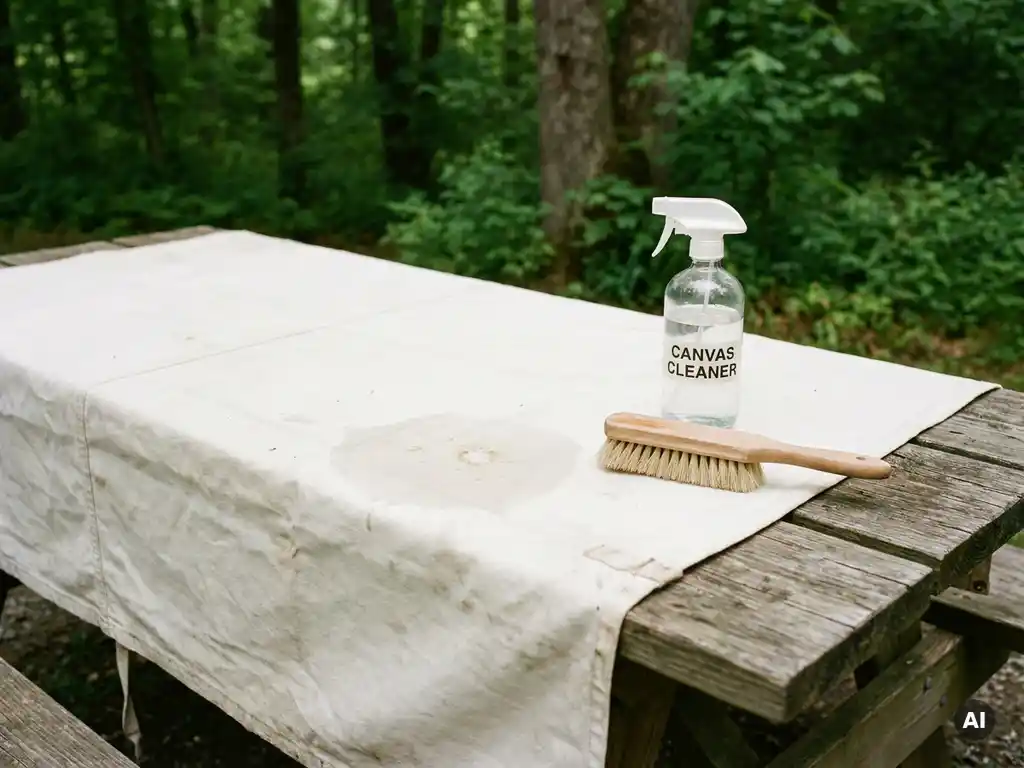
Bird droppings on your tent fabric are a nuisance, but the real problem only starts if you leave them for too long. The acids in bird droppings corrode the fabric and can leave a permanent stain within a few days. Fortunately, the damage can be prevented if you act quickly and correctly.
In this guide, you’ll learn, step by step, how to remove bird droppings from tent fabric without leaving any permanent stains, what mistakes to avoid, and how to best protect the fabric afterwards.
Here’s what you’ll need for cleaning
Before you start cleaning your tent fabric, it’s a good idea to lay everything out in advance. That way, you can work efficiently and avoid having to stop halfway through. The items you’ll need are simple and you’ll probably already have them, or they’re easy to get hold of.
- A soft brush or sponge (not a hard scouring pad)
- A bucket of lukewarm water
- A clean cloth or microfibre cloth
- A suitable tent fabric cleaner, such as a special Hood & Tent Shampoo for everyday stains or a Heavy Duty Cleaner for stubborn dirt
- A waterproofing agent for treating the fabric after cleaning
Usage never Ordinary household soap, washing-up liquid or bleach on tent fabric. These products damage the fabric’s coating and compromise the water-repellent layer. A product specially formulated for canvas, polyester or nylon will give you the best results without damaging the fabric.
How to remove bird droppings, step by step
Now that you’ve got everything to hand, it’s time to tackle the stain. The order of the steps is important: always start by removing the coarse material before you wash the item. This will prevent you from rubbing the poo further into the fibres.
- Let the poo dry out first whilst it is still fresh and sticky. Don’t try to wipe away wet bird droppings straight away, as you’ll just smear them around. Wait until they’re dry and crumbly.
- Remove any large bits of rubbish Gently use a blunt object, such as the back of a spoon or a soft brush. Work from the outside in so as not to spread the stain.
- Moisten the affected area with lukewarm water to loosen the remaining stain.
- Apply the tent fabric cleaner Apply to the stain and leave the product to work for a short while, following the instructions for use. For stubborn stains, use a Heavy Duty Cleaner; for lighter soiling, a standard tent shampoo will suffice.
- Gently work the cleaner into the surface using a soft brush or sponge, working in circular motions from the centre of the stain outwards.
- Rinse the area thoroughly with clean, lukewarm water until all the cleaner has been removed. Any residue left behind may damage the cloth.
After rinsing, check whether the stain has gone. If any trace remains, repeat steps 4 to 6 before the fabric dries completely. Then leave the tent fabric to air-dry; never dry it in direct sunlight or with a hairdryer, as heat will damage the fabric’s coating.
Ready for your next adventure?
Discover Rokimi’s professional cleaning and protection products and keep your tent fabric, awnings, boat covers and other outdoor equipment looking good for longer.
- ✓ Professional formula
- ✓ Specialist in cleaning & protection
- ✓ Certified quality
Check that the stain has completely disappeared
Take a good look at the fabric once it is completely dry. A stain that appears to have disappeared whilst still wet may still be visible once it has dried. A dry fabric gives you the most reliable indication of the result.
Hold the fabric at an angle to the light and check whether any discolouration, greasy patches or white residue are still visible. Bird droppings contain uric acid, which can discolour the fabric, so pay particular attention to yellow or brownish tints. If the stain is still visible after drying, repeat the cleaning process. For stubborn stains that do not disappear completely on the first attempt, a product with a stronger formula is the best choice for cleaning tent fabric.
Restore the water-repellent properties after cleaning
Cleaning is an effective way of removing stains from tent fabric, but it also has a side effect: washing weakens the fabric’s water-repellent coating. This applies to every cleaning session, even if you use the right products. Without re-impregnating the fabric, water will no longer bead up and roll off the fabric, but will soak through it.
- Make sure the cloth is completely dry before you start waterproofing. A damp cloth does not absorb the waterproofing agent properly.
- Apply the waterproofing agent evenly over the cleaned area and, preferably, over the entire cloth, so that the protective layer is equally thick throughout.
- Allow the product to be absorbed and dry according to the instructions on the packaging.
- Test the water repellency by sprinkling a little water onto the fabric. The water should immediately bead up and roll off the surface. If the water continues to be absorbed by the fabric, apply a second coat of waterproofing agent.
A well-impregnated cloth offers better protection against future stains, including bird droppings. Dirt adheres less firmly to a treated surface, making the next cleaning session much easier.
Common mistakes when removing bird droppings
Even with the best of intentions, things often go wrong when cleaning tent fabric. Knowing the most common mistakes will help you avoid them and protect your equipment.
- Waiting too long: The longer bird droppings remain on the fabric, the deeper the acids will penetrate. Remove the stain as soon as possible.
- Spread wet poo straight away: Wait until the faeces have dried, then remove any large pieces first. Rubbing the stain will make it bigger and drive the dirt deeper into the fibres.
- Using the wrong cleaning products: Washing-up liquid, bleach and all-purpose cleaning products damage the coating on tent fabric. Always use a product that has been specially developed for tent fabric or outdoor textiles.
- Scrubbing too hard: Aggressive scrubbing damages the fabric coating and may permanently reduce its waterproofing. Always use gentle, circular movements.
- Forgot to waterproof: Impregnation is essential after every clean. Anyone who skips this step will find, come the next rain shower, that the fabric has lost its water-repellent properties.
- Drying in direct sunlight or using heat: Heat damages the fibres and coating of tent fabric. Always leave the fabric to air-dry in a shaded spot.
Bearing these mistakes in mind, you’ll be well prepared to remove bird droppings from your tent fabric quickly and safely, without damaging the material.
How Rokimi helps with cleaning tent fabric
We understand how frustrating it is to discover stains on your tent fabric, especially when you’re not sure which product is safe to use. That’s why we’ve developed a complete range specifically designed for tent fabric, boat covers and other outdoor materials. Whether it’s fresh bird droppings or stubborn discolouration after winter storage, we have a suitable solution.
- Hood & Tent Shampoo: Ideal for regular cleaning of lighter stains and green deposits. Suitable for canvas, polyester and nylon.
- Heavy Duty Cleaner: For stubborn stains that won’t come out with ordinary shampoo. Our strongest cleaner for extremely soiled cloths.
- Hood & Tent Protection: The most effective water-repellent treatment of its kind, for optimum water repellency after every clean.
Our products do not need to be diluted, are easy to use and penetrate right down into the fibres of the fabric for a thorough and long-lasting clean. View our full product range or find out which applications our products are suitable. Want to find out more or place an order straight away? Go to rokimi.com.
Everything you need for a clean and protected outdoor lifestyle.
Discover Rokimi’s range of professional cleaning and protection products.
BEKIJK ALLE PRODUCTEN →Frequently Asked Questions
How quickly should I remove bird droppings from my tent fabric?
It’s best to remove bird droppings as soon as possible, but do wait until they are completely dry and crumbly before you start cleaning. Wiping away fresh, wet droppings will spread the stain and drive the dirt deeper into the fibres. Once the droppings are dry, act as quickly as possible: the acids in bird droppings start to damage the fabric within a few hours and can leave a permanent stain after a few days.
Can I remove bird droppings from all types of tent fabric in the same way?
The basic steps are the same for most tent fabrics, but the cleaning product used must always be suited to the specific material. Canvas, polyester and nylon each have a different coating and react differently to cleaning products. You should therefore always choose a cleaner that is explicitly suitable for the material of your tent fabric, such as Rokimi Hood & Tent Shampoo, which has been specially developed for all these types of material.
What should I do if the stain has already dried and become discoloured by bird droppings?
If a stain has dried in or become discoloured, a standard tent shampoo is often not enough. In that case, use a Heavy Duty Cleaner with a stronger formula, leave the product to work for longer than usual, and repeat the cleaning process several times if necessary. Always check the fabric only once it is completely dry, as this is the only way to see properly whether the stain has completely disappeared.
How often should I impregnate my tent fabric?
Re-waterproof your tent fabric after every wash, regardless of how thorough or superficial it was. Washing always weakens the water-repellent coating, even if you use the right products. Apart from cleaning, it is advisable to re-waterproof the fabric at least once a season, or more often if you notice that water is no longer beading off the surface but is starting to soak into the fabric.
Can I wash my tent fabric in the washing machine to remove bird droppings?
This is strongly discouraged. The washing machine is too harsh for the coating and the construction of most tent fabrics: the mechanical force of the drum and the high temperatures damage the water-repellent layer and can affect seams and reinforcements. Hand washing with a soft brush and a specialised tent fabric cleaner provides a safer and more effective result without damaging the material.
What if I’ve accidentally used washing-up liquid or household soap after all?
In that case, rinse the cloth as quickly and thoroughly as possible with clean, lukewarm water to remove as much of the product as possible. Then check the coating by sprinkling water onto the fabric: if the water is absorbed into the fabric rather than beading up, the water-repellent layer has been compromised. Restore the waterproofing as soon as possible using a suitable waterproofing agent and, in future, avoid products that have not been specifically developed for tent fabric.
How can I stop bird droppings from becoming a problem again?
De beste preventie is een goed geïmpregneerd doek: vuil, waaronder vogelpoep, hecht minder sterk aan een behandeld oppervlak, waardoor het makkelijker te verwijderen is. Dek je tent of kap af als je hem langere tijd niet gebruikt en stals hem indien mogelijk niet onder bomen of op plekken waar veel vogels verblijven. Controleer het doek regelmatig en verwijder verse vervuiling direct, voordat de zuren de kans krijgen om in te werken.
Related Articles
- How do you remove green deposits from a tent canvas without damaging it?
- How do you choose the right waterproofing treatment for your type of fabric?
- Can you waterproof your tent fabric in damp weather?
- What is the cost of professional tent canvas maintenance?
- How does wind affect impregnation of tent fabric?