


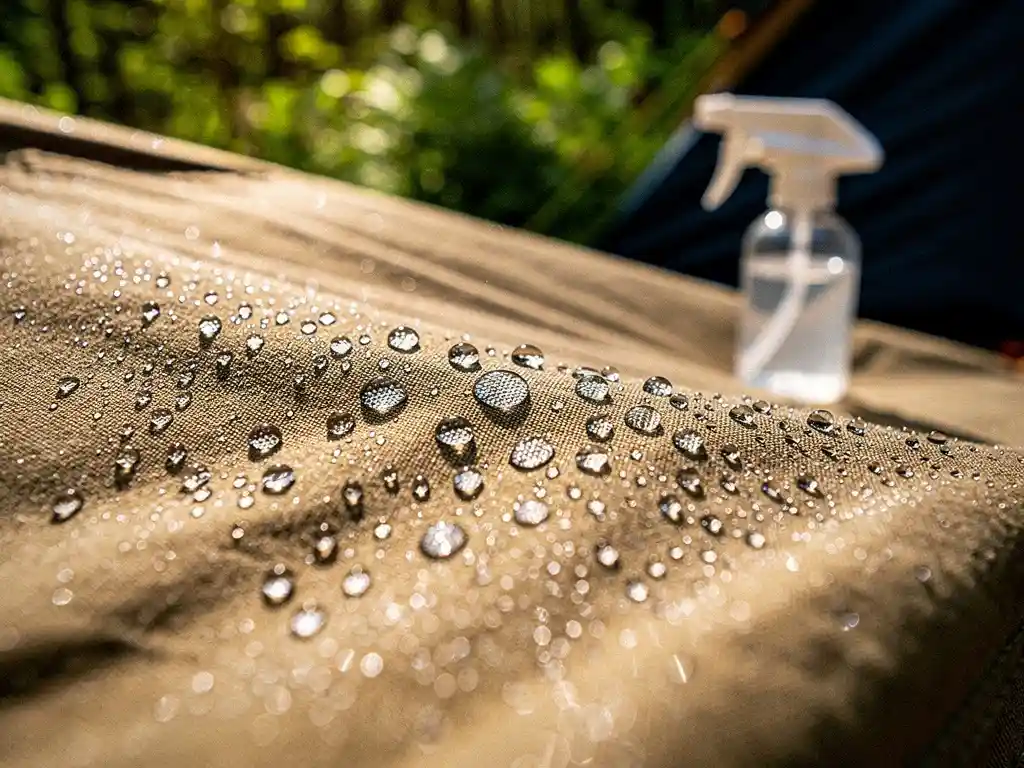
The best waterproofing treatment for canvas in 2026 is a product that has been specially formulated for outdoor textiles, penetrates deep into the fibres and guarantees long-lasting water repellency without damaging the fabric. When it comes to canvas, you need a product that respects the material’s natural structure whilst still building up a robust protective layer. Below, we answer the most frequently asked questions about waterproofing canvas, so you know exactly what to do and when.
How do you know if your canvas needs re-impregnating?
Your canvas needs to be treated again as soon as water no longer beads up and rolls off the surface, but soaks into the fabric and leaves dark, wet patches. This is the clearest sign that the water-repellent properties have worn off. Other signs include a musty odour after rain, slight discolouration caused by damp, or a canvas that remains wet for a long time after a downpour.
A simple test is the so-called water droplet test: splash a little water onto the fabric. Does the water roll off straight away? If so, the waterproofing is still effective. Does the water soak in or spread out like a stain? If so, it’s time to reapply the waterproofing. Carry out this test at the start of the camping season and after intensive use or a thorough clean, as washing significantly accelerates the loss of water repellency.
What is the difference between spray and liquid waterproofing treatments for canvas?
Spray-on waterproofing agents are user-friendly and suitable for quick treatments of smaller surfaces, whilst liquid waterproofing agents penetrate deeper into the fibres and are therefore better suited to large pieces of canvas such as awnings and canopies. For canvas, the liquid variant is generally more effective because the material is naturally more porous than synthetic fabrics.
With a waterproofing spray for a tent, you apply the product layer by layer, which is handy for specific areas or hard-to-reach seams. The downside is that the coverage may be less even, particularly on large surfaces. A liquid waterproofing agent can be applied using a sponge, brush or garden sprayer, allowing you to treat the fabric thoroughly and evenly. This ensures a more consistent protective layer, which is particularly important for canvas due to its irregular weave.
Ready for your next adventure?
Discover Rokimi’s professional cleaning and protection products and keep your tent fabric, awnings, boat covers and other outdoor equipment looking good for longer.
- ✓ Professional formula
- ✓ Specialist in cleaning & protection
- ✓ Certified quality
Do you need to clean the canvas before waterproofing it?
Yes, you should always clean canvas thoroughly before applying a waterproofing treatment. A waterproofing agent bonds to the fibres of the canvas, and if there is dirt, mould or grease on it, the agent will not penetrate properly and the protective layer will bond to the dirt rather than to the material itself. The result is then an uneven and short-lived impregnation.
A good step-by-step guide to waterproofing a tent therefore always starts with cleaning. First, remove any loose dirt and dust. Then wash the canvas with a suitable fabric shampoo that leaves no soap residue, as soap interferes with the adhesion of the waterproofing agent. Allow the fabric to dry completely before you start waterproofing. For stubborn stains or ingrained dirt, a more powerful cleaner is needed before you apply the protective coating. Never skip this step, as a clean and dry fabric is the basis for effective and long-lasting water repellency.
How long does a waterproofing treatment last on canvas?
A good waterproofing treatment on canvas lasts, on average, one to two camping seasons, depending on how intensively the fabric is used, how often it is washed and the weather conditions to which it is exposed. Canvas that is regularly exposed to rain, gets a lot of sun or is cleaned frequently will need to be re-treated sooner.
Intensive use and UV radiation are the two main factors causing wear and tear on the water-repellent coating. Prolonged exposure to sunlight gradually breaks down the protective coating, even if the fabric does not get wet. Washing significantly accelerates this process, as detergents partially dissolve the water-repellent layer. A handy rule of thumb: carry out the water droplet test at the start of each new camping season and re-waterproof the fabric as soon as it starts to absorb water rather than repel it. This way, you’ll always keep your canvas optimally protected.
Which waterproofing agents work best on canvas in 2026?
The best waterproofing treatments for canvas in 2026 are products specifically designed for outdoor textiles, which penetrate deep into the fibres and can withstand prolonged exposure to rain, UV light and temperature fluctuations. Avoid all-purpose water-repellent sprays intended for hard surfaces or jackets, as these are not suitable for the heavier demands placed on tent fabric and awnings.
Ideally, choose a waterproofing agent that is specially formulated for canvas and has been tested on the types of fabric you are using. Bear the following criteria in mind when making your choice:
- Material compatibility: suitable for canvas, but also for polyester and nylon if you have several items of kit
- Penetration depth: the product must penetrate right into the fibres, not just form a surface layer
- Ease of use: Ready to use without dilution, so you’re always using the correct concentration
- Sustainability: A longer duration of action means less frequent repeat treatment
- Environmental friendliness: Choose a product that is safe for the environment and contains no harmful substances
Products that meet all these criteria and have been specifically developed for outdoor textiles consistently outperform generic alternatives from DIY stores.
Is it possible to waterproof canvas too often?
No, impregnating canvas too often isn’t a problem in practice, as long as you clean the fabric thoroughly each time before treatment. An extra layer of waterproofing on a canvas that is already well protected simply has little effect, but it does not damage the material. The only risk is that you’ll be wasting the product if the previous layer is still fully active.
There is one exception: if you apply the waterproofing treatment to a dirty or poorly cleaned fabric, the build-up of layers of the product mixed with dirt can result in a stiff or discoloured surface. You should therefore only apply the impregnating agent after a thorough clean and carry out the water droplet test first. If the water still beads up well, a new treatment is not necessary and you can save the product for next time.
How we help with waterproofing canvas
At Rokimi, we have developed a comprehensive range of products designed specifically to meet the needs of campers who want to look after their canvas equipment properly. Together, our products form a logical care cycle, from cleaning to protection:
- Hood & Tent Shampoo: removes green deposits, dust and light soiling from canvas, polyester and nylon without leaving any soap residue
- Heavy Duty Cleaner: for stubborn stains, ingrained dirt and mould that a standard shampoo cannot tackle
- Hood & Tent Protection: our most effective waterproofing agent, specially formulated for waterproofing fabric and making tents, awnings and porches water-repellent
All products are ready to use, do not need to be diluted and are suitable for both beginners and experienced campers. They penetrate deep into the fibres to provide long-lasting protection that lasts the whole season. View our full product range or find out which applications our products are suitable for. Ready to give your canvas the best possible protection? Go to rokimi.com and take the first step towards a dry and clean tent this season.
Everything you need for a clean and protected outdoor lifestyle.
Discover Rokimi’s range of professional cleaning and protection products.
BEKIJK ALLE PRODUCTEN →Frequently Asked Questions
Can I waterproof my canvas tent whilst it’s still wet?
It is strongly advised not to apply a waterproofing agent to a wet canvas. Moisture in the fibres prevents the product from penetrating and bonding properly, resulting in an uneven and short-lived protective layer. Always allow your canvas to air-dry completely — preferably in the sun — after cleaning before you start waterproofing. One exception is specific ‘wet-on-wet’ formulations designed for application to damp fabric; always read the product instructions carefully.
What should I do if my canvas looks patchy or uneven after waterproofing?
Uneven patches after waterproofing usually occur because the product has not been applied evenly or because the fabric was not completely clean before treatment. In this case, apply an extra coat to the stained areas whilst the fabric is still slightly damp from the first treatment, so that the layers blend together more effectively. If the problem persists, thorough cleaning with a fabric shampoo and re-waterproofing are the most reliable solutions. For large surfaces such as awnings, it is best to use a garden sprayer or a brush to ensure a more even distribution.
Is it necessary to treat seams and rows of stitching separately when waterproofing canvas?
Yes, seams and rows of stitching are the weakest points in any tent fabric and deserve extra attention. Water can easily seep in through the needle holes in the stitching, even if the rest of the fabric is perfectly waterproofed. After the general waterproofing treatment, apply an extra targeted coat to all seams using a spray can or a seam-sealing brush. For maximum protection, you can also use a special seam sealer in combination with your regular waterproofing product.
How should I store my wood preservative after use to ensure it retains its effectiveness?
After use, store your impregnating agent in a cool, dry place, away from direct sunlight and extreme temperatures. Ensure the cap or spray nozzle is tightly closed to prevent the product from drying out and oxidising. Most high-quality impregnating agents will keep for two to three years if stored correctly. Shake the container well before each use to ensure the active ingredients are thoroughly mixed, especially if the product has been left standing for a long time.
Can I use the same waterproofing treatment for my canvas tent as well as my synthetic sleeping bag or raincoat?
Many waterproofing products suitable for canvas also work well on polyester and nylon, but always check the product description before applying a product to multiple materials. Canvas is a heavier and more porous fabric than the thin synthetic fabrics used in sleeping bags or raincoats, and generally requires a more potent formula. A product specifically developed for canvas may be too heavy for delicate membrane fabrics such as Gore-Tex. For each type of material, it is best to use a product that has been explicitly tested and recommended for that material.
How long should I wait after impregnation before I can use my tent again?
After applying the waterproofing agent, the fabric must be allowed to dry and cure completely before you store or use the tent. This usually takes 24 to 48 hours at room temperature, but dry, sunny weather can speed up this process. Always check the drying time on the packaging of your specific product. Never store the tent whilst it is still damp after waterproofing, as this can encourage mould growth and damage the newly applied protective coating.
What are the most common mistakes made when waterproofing canvas that I should avoid?
The most common mistakes are: waterproofing without cleaning thoroughly beforehand, applying the product to a wet or damp fabric, using too little product, which results in thin patches, and missing seams and corners. Another common mistake is waiting until the fabric is already visibly leaking before re-waterproofing it — by that point, the material has already been subjected to unnecessary strain. Instead, carry out the water droplet test as a preventative measure at the start of each season and treat your canvas in good time, so that you’re always one step ahead of bad weather.