


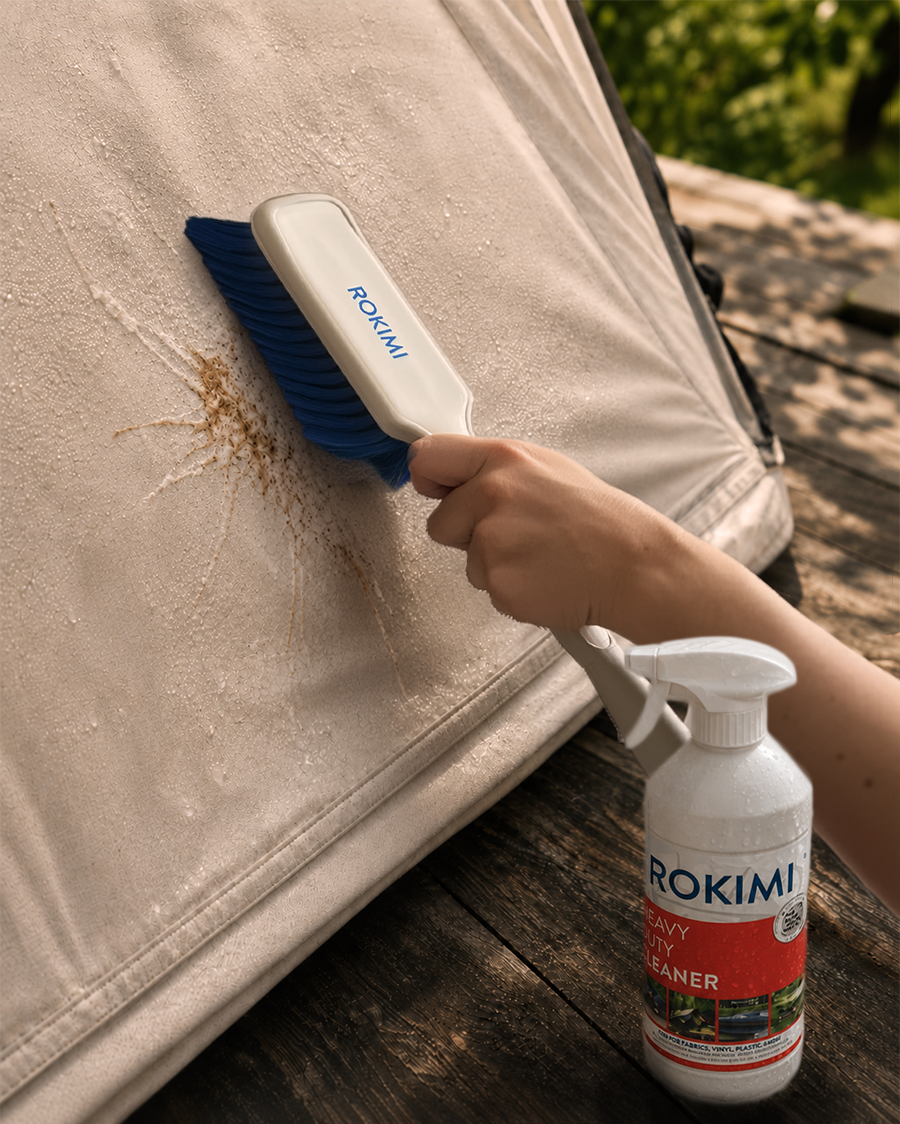
Why are bird droppings so difficult to remove from tent fabric?
Bird droppings are particularly stubborn on tent fabric because they contain a combination of proteins, fats and acids that cling to the fabric fibres. This natural composition causes the stains to penetrate deep into the fabric and, as they dry, form a strong bond with the material.
The problem is exacerbated by the fact that bird droppings often contain urate, a crystalline compound that is poorly soluble in water. Once the droppings have dried, they form a hard crust that cannot be easily removed with just soap and water. Furthermore, the acidity of bird droppings can vary depending on the bird’s diet, which affects how aggressively the stain affects the tent fabric.
What damage can bird droppings cause to tent fabric?
Bird droppings can cause permanent discolouration on tent fabric and, if left in contact for a long time, can even damage the water-repellent coating. The acids in bird droppings can weaken the fibres and, in the case of canvas materials, can even cause small holes.
As well as causing direct damage to the fabric, bird droppings can also damage the waterproofing of the tent fabric. This means that the fabric will start to let water through in those areas, which can lead to leaks in your tent. Particularly with modern tent fabrics featuring special coatings, prompt removal is crucial to prevent permanent damage. Waterproofing tent fabric becomes considerably more difficult if the original coating has been compromised by bird droppings.
Ready for your next adventure?
Discover Rokimi’s professional cleaning and protection products and keep your tent fabric, awnings, boat covers and other outdoor equipment looking good for longer.
- ✓ Professional formula
- ✓ Specialist in cleaning & protection
- ✓ Certified quality
How do you remove fresh bird droppings from your tent?
With fresh bird droppings, speed is of the essence: gently scrape away the excess material with a plastic spatula and rinse immediately with cold water, working from the outside in. Avoid rubbing, as this will push the droppings deeper into the fabric.
Once you’ve rinsed off the coarse dirt, you can treat the stain with lukewarm water and mild soap. Dab the stain from the outside towards the centre to prevent it from spreading. Allow the tent fabric to dry thoroughly before storing it. For the best tips on tent fabric care, it is important to always rinse from the back of the fabric, so that you do not push the poo further into the fibres.
What can you do about stubborn bird droppings that have already dried up?
Dried bird droppings require a step-by-step approach: first soak the stain in lukewarm water for 15–30 minutes to soften the dried matter. Then carefully scrape away the loosened bits and treat the remaining stain with a specialist cleaning product.
For stubborn stains, an enzymatic cleaner can help break down the protein compounds. Leave the cleaner to work for at least 10 minutes before scrubbing it off with a soft brush. For very old stains, it may be necessary to repeat this process several times. Removing stains from tent fabric caused by dried bird droppings requires patience and the right technique to avoid damaging the material.
Which products are best for removing bird droppings from tent fabric?
Professional tent fabric cleaners with an enzymatic action are the most effective for removing bird droppings, as they break down the protein compounds without damaging the fabric. Avoid bleaches or harsh chemicals, which can damage the water-repellent coating.
For regular cleaning after removing bird droppings, a specialised tent fabric shampoo is ideal. These products have been specially developed to clean tent fabric without affecting the waterproofing. After cleaning, it is essential to re-waterproof the tent fabric with a high-quality waterproofing agent to restore its water-repellent properties.
How Rokimi helps remove bird droppings
We offer a complete solution for effectively removing bird droppings and repairing your tent fabric. Our product range has been specially developed to tackle even the most stubborn stains without damaging your valuable tent fabric.
For bird droppings, we recommend the following approach:
- Start with our Hood & Tent Shampoo for light to moderate soiling and fresh stains.
- Use our Heavy Duty Cleaner for stubborn, dried-on bird droppings that have penetrated deep into the surface.
- Finish the treatment with Hood & Tent Protection to ensure your tent fabric is as water-repellent as possible.
- All products are ready to use and suitable for canvas, polyester and nylon fabrics.
Our many years of expertise in tent fabric care have led to formulations that penetrate right down to the fibres, ensuring thorough cleaning and long-lasting protection. Take a look at our applications for specific instructions on use or contact Contact us for personalised advice. Visit our website for more information on how to keep your tent fabric in perfect condition.
Everything you need for a clean and protected outdoor lifestyle.
Discover Rokimi’s range of professional cleaning and protection products.
VIEW ALL PRODUCTS →Frequently Asked Questions
How often should I re-waterproof my tent fabric after removing bird droppings?
After every thorough clean involving the removal of bird droppings, it is advisable to re-waterproof your tent fabric. The acids in bird droppings can damage the water-repellent coating in specific areas, so re-waterproofing may be necessary even after a single incident. Test the water-repellency by placing a drop of water on the cleaned area – if the water is absorbed rather than beaded up, re-impregnation is necessary.
Can I remove bird droppings from tent fabric in the washing machine?
It is strongly advised against putting tent fabric with bird droppings in the washing machine. The mechanical action can push the droppings deeper into the fibres and contaminate other parts of the tent fabric. Furthermore, the acids and proteins in bird droppings can damage the washing machine. Always pre-treat stains by hand using the appropriate cleaning products before considering having the tent fabric professionally cleaned.
What should I do if the bird droppings are still visible after cleaning?
Repeat the cleaning process using an enzymatic cleaner and leave it to work for longer (up to 30 minutes). For very stubborn stains, you can make a paste of bicarbonate of soda and water, leave this to work for 2–3 hours and then rinse off. If the stain persists, professional cleaning may be necessary. Never use harsher agents, as this can cause permanent damage to the tent fabric.
Is it safe to use household cleaning products on tent fabric?
Avoid all-purpose cleaners, bleaches and ammonia-based products, as these can permanently damage the water-repellent coating. Washing-up liquid can be used in emergencies, but dilute it well and rinse thoroughly. For best results and to protect the material, always use specialist tent fabric cleaners designed for technical textiles.
How can I stop birds from pooping on my tent?
Do not pitch your tent under trees where birds like to perch, and avoid areas with a lot of bird activity, such as near water or food sources. Reflective tape or bird-repellent strips can help, but position them so that they do not hinder the tent’s functionality. A groundsheet or tarpaulin placed over your tent can also offer protection, particularly when camping for extended periods at fixed locations.
When is a bird droppings stain too old to be removed successfully?
There is no strict time limit, but stains that are months old and have been exposed to various weather conditions are more difficult to treat. If the stain has discoloured and the fibres are visibly damaged, it may no longer be possible to remove it completely. Always try the enzymatic treatment first – even very old stains can sometimes be significantly improved with the right approach and enough patience.
Related Articles
- Hoe laat je tentdoek veilig en volledig drogen?
- Why does water seep into your tent even though you’ve waterproofed it?
- How much waterproofing treatment do you need for an average tent?
- How long does it take to impregnate tent fabric properly?
- What is the best way to prepare tent fabric for impregnation?