


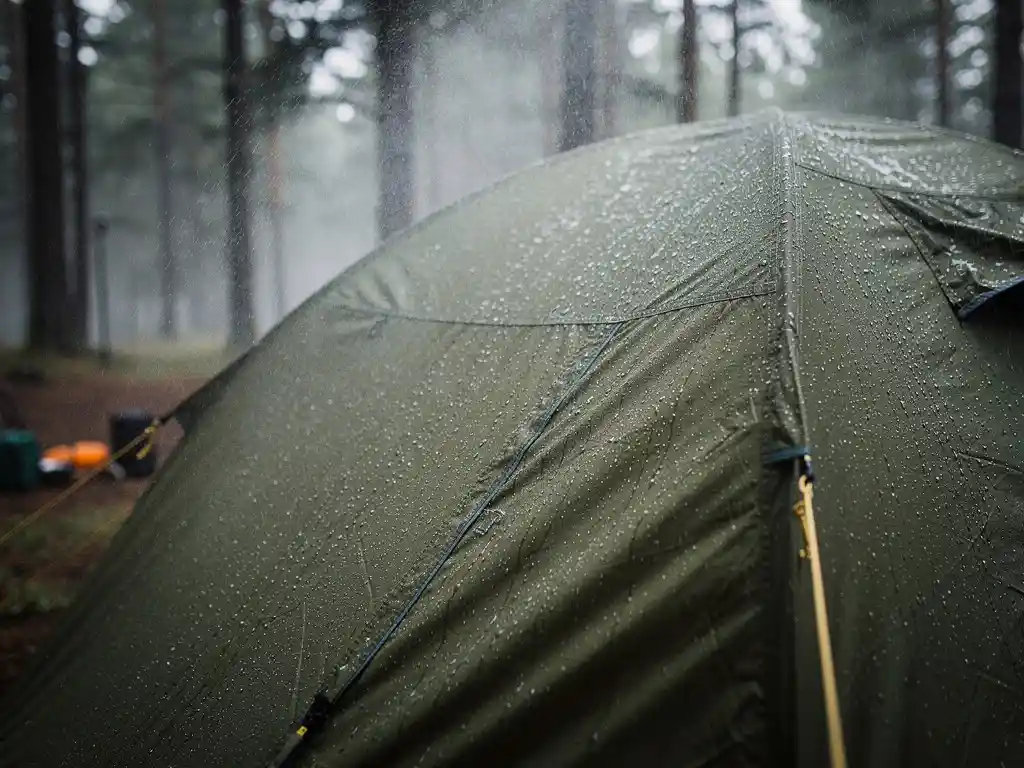
You can waterproof a tent whilst it is slightly damp, but waterproofing it whilst it is completely wet does not work well. The waterproofing agent will not adhere properly to the fibres, resulting in an uneven water-repellent layer or one that offers little protection. In this article, we answer the most frequently asked questions about the right time and the correct method.
Does waterproofing spray work better on a dry or wet tent?
Waterproofing treatment works best on a tent that is slightly damp, also known as “damp-dry”. This means that the fabric is no longer dripping, but is not yet completely dry. In this state, the fibres of the tent fabric are open, allowing the treatment to penetrate deeper and form a stronger protective layer.
The product also adheres well to a completely dry tent, but absorption is slightly less effective than on a slightly damp fabric. However, a completely wet fabric is the worst-case scenario: the water in the fibres blocks the impregnating agent from penetrating, resulting in a thin and unreliable protective layer. Most manufacturers therefore recommend cleaning the fabric first, then allowing it to drain, and applying the waterproofing agent before the fabric is completely dry.
What happens if you waterproof a wet tent?
If you waterproof a wet tent, the excess water dilutes the waterproofing agent and prevents it from adhering properly. The result is an uneven protective layer that breaks down quickly and offers little water-repellent protection. Not only are you wasting the product, but you’re also wasting your time.
Specifically, the following problems may arise:
- The impregnating agent washes away before it is absorbed into the fibres
- Dry and wet patches on the canvas result in a patchy finish
- The water-repellent properties are much less effective than expected once dry
- You will need to repeat the process, which will involve additional costs and effort
In short: waterproofing a tent that’s too wet is a waste of money. Take the time to let the fabric drain properly first.
How dry does a tent need to be before you waterproof it?
The tent should feel dry to the touch, but not yet completely dry. A practical test: touch the fabric and check whether your hand gets wet. If it doesn’t, but the fabric still feels cool to the touch, you’re in the ideal zone. This is also known as the “wet-dry” state.
In practice, this means the following:
- After cleaning, allow the tent to drain thoroughly for at least 10 to 15 minutes
- Remove any excess water with a soft cloth or sponge
- It is best to work on a cloudy day without direct sunlight, so that the canvas does not dry out too quickly
- In warm and windy weather, the fabric can dry out too quickly: in that case, apply the waterproofing agent sooner or work in sections
If the tent is already completely dry, it’s not a disaster. Simply apply the waterproofing treatment as instructed and ensure an even coat.
Which waterproofing treatment works best for tent fabric?
The best waterproofing treatment for tent fabric is a product specifically designed for outdoor textiles such as canvas, polyester or nylon. Generic sprays from the supermarket are often less effective because they are not tailored to the density and structure of tent fabric. A high-quality waterproofing agent penetrates deep into the fibres and forms a long-lasting water-repellent layer.
When making your choice, please bear the following points in mind:
- Material suitability: Check whether the product works on your type of fabric, such as canvas or polyester
- Ease of use: Ready-to-use products that do not require dilution are simpler to use and produce more consistent results
- Durability of the protection: Choose a package that will last for several seasons
- Safety for the equipment: Harsh chemicals can damage or discolour fibres
Impregnating canvas requires a different product to that used for polyester or nylon, as canvas has an open weave that absorbs more of the product. Always read the product description carefully before you start.
Do you need to clean a tent before waterproofing it?
Yes, you should always clean a tent thoroughly before waterproofing it. Dirt, green deposits, grease and dust block the pores of the fabric and prevent the waterproofing agent from being properly absorbed. Waterproofing a dirty fabric is like painting an unprepared wall: the result won’t last.
Cleaning and waterproofing together form a logical step-by-step guide to waterproofing fabric:
- Remove loose dirt and dust with a soft brush
- Clean the fabric using a suitable tent shampoo or a stronger cleaner for stubborn dirt
- Rinse the cloth thoroughly with clean water
- Leave the cloth to drain until it is slightly damp
- Apply the impregnating agent evenly over the entire surface
- Leave the fabric to dry completely, preferably in the open air
Never skip the cleaning step, even if the tent looks reasonably clean. Invisible dirt and residues of old waterproofing agent can adversely affect the adhesion of the new protective layer.
How long does it take for the wood preservative to be absorbed?
The drying time for the impregnating agent varies depending on the product and conditions, but in most cases the fabric will be dry enough for light use after 1 to 2 hours. For complete curing and maximum water-repellent effect, 24 hours’ drying is recommended, preferably in the open air at room temperature.
Some factors that affect drying time:
- Temperature: Warmer conditions speed up the drying process, but direct sunlight can cause the product to dry too quickly, preventing it from being fully absorbed
- Humidity: In high humidity, it takes longer to dry
- Thickness of the fabric: Heavier canvas takes longer than thinner polyester
- Amount of product applied: A thick layer takes longer to dry than an evenly thin layer
Do not use the tent until the fabric is completely dry. If it rains or the fabric gets damp whilst drying, the protective coating may be damaged before it has fully cured.
How Rokimi helps with waterproofing your tent
Here at Rokimi, we have developed a comprehensive range of products that ties in perfectly with the step-by-step guide described above. Whether you want to look after an awning, a dome tent, a canopy or a boat cover, we offer the right products for every stage of the maintenance process.
- Hood & Tent Shampoo: removes green deposits, dust and light soiling from canvas, polyester and nylon; ready to use without diluting
- Heavy Duty Cleaner: for stubborn stains, mud and ingrained dirt that a standard shampoo cannot cope with
- Hood & Tent Protection: The most effective waterproofing treatment for tent fabric of its kind; it makes your fabric water-repellent and protects it from the elements for several seasons
All products are ready to use, gentle on the equipment and designed for campers who take their kit seriously. View our full product range or find out which applications our products are suitable for. Ready to get your tent ready for the new season? Visit Rokimi.com and get started straight away.
Frequently Asked Questions
How often should you re-waterproof a tent?
How often you need to waterproof your tent depends on how you use it and the weather conditions to which the fabric is exposed. As a rule of thumb, waterproof your tent at least once a season, or as soon as you notice that water is no longer beading up and rolling off the fabric but is starting to soak in. Intensive use, heavy rain or prolonged exposure to UV light accelerate the wear and tear of the protective coating, meaning you’ll need to waterproof it again sooner.
Can I waterproof a tent whilst it’s still pitched?
Yes, it’s actually advisable to waterproof a tent whilst it’s pitched, so that the fabric is taut and the waterproofing agent can be applied evenly. A limp or folded tent can result in uneven coverage and areas being missed. Do make sure the tent is on a flat surface and that you pay extra attention to all seams, corners and hard-to-reach areas.
What should I do if I’ve accidentally applied too much waterproofing agent?
If you have applied too much wood preservative, immediately dab away the excess with a clean, dry cloth before it soaks in. A layer that is too thick can result in a sticky or patchy surface once dry, and will also dry more slowly and unevenly. Then leave the cloth to dry completely in a well-ventilated area and check the result; if there are any marks, you can repeat the treatment with a thinner, more even coat.
Does waterproofing also work on the seams of a tent, or do I need a separate product for that?
Tent fabric waterproofing treatment protects the fabric itself, but the seams of a tent usually require a separate seam sealer. Seams are the weakest link in a tent’s waterproofing, as the fabric is pierced by the stitching at these points. Apply seam sealer specifically to the seam lines as a complement to waterproofing the fabric, so that your tent is fully protected all round.
Can I waterproof a tent in winter or at low temperatures?
Impregnation at low temperatures is not recommended, as most impregnating agents require a minimum temperature of around 10 to 15 degrees Celsius to penetrate properly and cure. At freezing temperatures, the treatment cannot adhere properly and the moisture in the fibres freezes, damaging the protective layer. It is best to choose a dry day in spring or autumn with mild temperatures, or prepare your tent indoors in a heated, well-ventilated room.
How can I tell if my tent has really been properly waterproofed after the treatment?
The simplest way to check whether the waterproofing has been successful is the water droplet test: sprinkle a little water onto the completely dry cloth and see if the droplets bead up and roll off. If the water remains in small beads and does not soak into the fabric, the protective layer has been applied correctly. If the water is absorbed or spreads like a stain, the waterproofing is insufficient and it is advisable to repeat the treatment after a thorough clean.
Is it harmful to use the wrong waterproofing treatment on my tent fabric?
Yes, using the wrong waterproofing agent or one that is too harsh can damage the tent fabric, cause discolouration or damage the material’s coating. Products not designed for outdoor textiles sometimes contain solvents that weaken the fibres or break down the manufacturer’s original water-repellent coating. Always use a waterproofing agent specifically designed for your type of fabric, such as canvas, polyester or nylon, and check the product description for material compatibility before you start.