


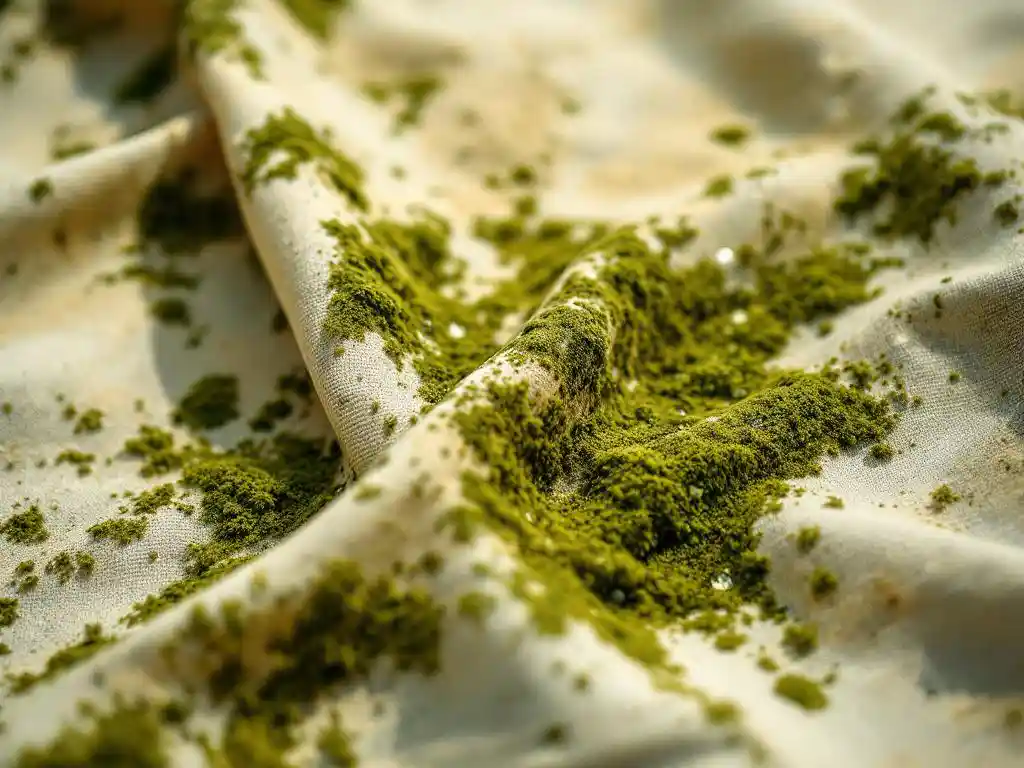
What exactly is green deposits on tent fabric?
Green deposits on tent fabric are a layer of algae, moss and mould that forms on the surface of tent and awning fabric due to long-term exposure to moisture and heat. This green discolouration occurs mainly in places where water stays for a long time or where the canvas gets wet regularly.
Green deposits consist of various micro-organisms that feed on organic material deposited on the canvas. Dust, pollen and other small particles are the breeding ground for these organisms. The problem mainly occurs on canvas and other natural materials, but synthetic fabrics such as polyester can also suffer from green discolouration.
Besides the unsightly green colour, deposits can also lead to unpleasant odours and eventually even damage the fabric material. Microorganisms can attack the fibres, causing the tent fabric to weaken and lose its water-repellent properties.
Why does my tent get green deposits?
Tents develop green deposits due to a combination of moisture, heat, organic matter and insufficient airflow. These conditions create the perfect breeding ground for algae and fungi that cause the characteristic green discolouration.
The main causes are long-term storage in damp conditions, such as storing a still damp tent in a sealed bag or shed. Tents left in the same place for a long time without regular cleaning also develop deposits faster. Shady camping spots under trees exacerbate the problem due to limited sunlight and extra organic material from falling leaves.
Certain materials are more susceptible to green deposits than others. Canvas and cotton tent fabrics are naturally more porous and offer more grip for micro-organisms. Damaged water-repellent coatings also make the canvas more susceptible to moisture absorption and subsequent scale formation.
Ready for your next adventure?
Discover Rokimi’s professional cleaning and protection products and keep your tent fabric, awnings, boat covers and other outdoor equipment looking good for longer.
- ✓ Professional formula
- ✓ Specialist in cleaning & protection
- ✓ Certified quality
How to remove green deposits from tent fabric?
Green deposits are removed by thoroughly cleaning the tent fabric with a specialised tent shampoo, followed by thorough rinsing and complete drying. Always start by brushing off loose dirt and leaves before wet cleaning.
For light green deposits, follow these steps: stretch the tent or lay the canvas flat on a clean surface. First rinse the canvas with clean water to remove surface dirt. Then apply a suitable tent shampoo to the affected areas and leave it to act for a few minutes. Use a soft brush to loosen the deposits and always work from the inside out to avoid spreading.
After brushing, rinse the canvas thoroughly with clean water until all the detergent is washed away. Let the tent dry completely in the sun before storing it. Stubborn stains may require repeating the process or switching to a more powerful detergent.
Which cleaners work best against green deposits?
Specialised tent shampoos work best against green deposits because they are specifically designed for outdoor textile materials and do not damage the water-repellent coating. Household cleaners can permanently damage tent fabric.
For regular green deposits, mild tent shampoos are usually sufficient. These products contain ingredients that effectively dissolve algae and fungus without affecting the fibres or coating. They are often biodegradable and safe for use on campsites.
For stubborn or ingrained deposits, you need a more powerful solution. Heavy-duty cleaners are specially formulated to penetrate deeper into the fibres and also remove old, stuck-on dirt. Avoid bleaches, clothing detergents or harsh household products: these can damage the tent fabric beyond repair and destroy its water-repellent properties.
How to prevent green deposits on your tent?
To prevent green deposits, always store your tent in a completely dry place, clean it regularly and impregnate it for optimal protection against moisture and dirt. Good ventilation and avoiding long-term storage in damp areas are essential.
Preventive measures start while camping: make sure the tent is well ventilated and regularly wipe away condensation. Choose sunny sites if possible and avoid long-term camping under trees where a lot of organic material falls down. Let the tent air out after each camping trip before storing it.
Proper impregnation is crucial for prevention. Tent fabric impregnation causes water to bead off instead of soaking into the fibres, reducing the chance for micro-organisms to establish themselves. Repeat impregnation annually or after each thorough cleaning for optimal protection against green deposits and other forms of soiling.
When is green manure impossible to remove?
Green deposits can no longer be completely removed when microorganisms have penetrated deep into the fibres and caused permanent discolouration, or when the tent fabric was already damaged before cleaning. This usually happens after months or years of neglect.
Signs that deposits may have become permanent include: discolouration that persists after several thorough cleanings, a musty smell that does not disappear, or tent fabric that feels soft and weak. Also, if the fabric does not dry properly or is no longer water-repellent after cleaning, this may indicate irreparable damage.
In some cases, very stubborn deposits can still be reduced, even if they do not disappear completely. It is always worth trying with a powerful cleaner before you consider the tent fabric lost. However, early treatment is crucial: the longer you wait, the less likely it is to recover completely.
How Rokimi helps with green deposits on tent fabric
We at Rokimi specialise in developing professional solutions for tent fabric care, including the stubborn challenge of green deposits. Our products are specifically developed for campers who want to keep their equipment in optimal condition.
Our range offers a complete approach to green attack:
- Hood & Tent Shampoo - For regular cleaning of light green deposits and preventive maintenance
- Heavy Duty Cleaner - For stubborn, ingrained deposits that do not respond to ordinary cleaning
- Hood and Tent Protection - For waterproofing the awning fabric after cleaning and preventing new deposits
All products are ready-to-use and do not need to be diluted, making them suitable for both experienced and novice campers. They work effectively on canvas, polyester and nylon without damaging the materials.
Discover our complete product range for awning fabric care or view our application guide for step-by-step instructions. For personal advice on your specific situation, you can always contact with us. Visit our website for more information on professional tent cloth care.
Everything you need for a clean and protected outdoor lifestyle.
Discover Rokimi’s range of professional cleaning and protection products.
BEKIJK ALLE PRODUCTEN →Frequently Asked Questions
How often should I check my tent for green cover?
Check your tent after every camping trip and at least every three months whilst it is in storage. Pay particular attention to damp patches, seams and areas where water may pool. Early detection prevents the build-up from penetrating deep into the fibres and becoming permanent.
Can I prevent green deposits by storing my tent in a dry area?
Yes, but only if the tent is completely dry before you store it. A dry storage area helps tremendously, but even in dry conditions, scale can develop if there is residual moisture in the tent fabric. Always air your tent completely for 24 hours before storage.
What should I do if the green deposit comes back after cleaning?
This usually indicates inadequate cleaning or lack of impregnation after cleaning. Repeat the cleaning process with a Heavy Duty Cleaner and always apply a protective impregnation afterwards. Also check your storage conditions - too much moisture may still be present.
Is it safe to use a tent with green deposits for camping?
Light green deposits are not dangerous to health, but they can cause unpleasant odours. However, it is important to treat the scale as it can eventually weaken the tent fabric and affect its water-repellent properties, leading to leaks.
Can I use ordinary household bleach against green deposits?
No, never use bleach on tent fabric. Bleach permanently damages fibres, destroys water-repellent coatings and can make canvas weak and porous. Always use specialised tent shampoos designed to be safe and effective for outdoor textiles.
How long does it take to completely remove green manure?
For light tarnish, one 30-60-minute treatment is usually sufficient. Stubborn deposits may require 2-3 treatments over several days. Always allow extra time for complete drying - this can take 6-24 hours depending on weather conditions and tent size.
Which tent materials are most prone to green cover?
Canvas and cotton tent fabrics are the most susceptible due to their porous structure. Polyester and nylon are more resistant, but can also get tarnish, especially if the water-repellent coating is damaged. Regular impregnation helps prevent tarnishing in all material types.
Related Articles
- How do you remove black mould stains from tent fabric?
- What is the best way to make a canvas water-repellent?
- How do you waterproof a tent that has green mould on it but has already been cleaned?
- How do you apply waterproofing to fabric without leaving stains?
- How to remove mould from tent fabric without damaging it?