


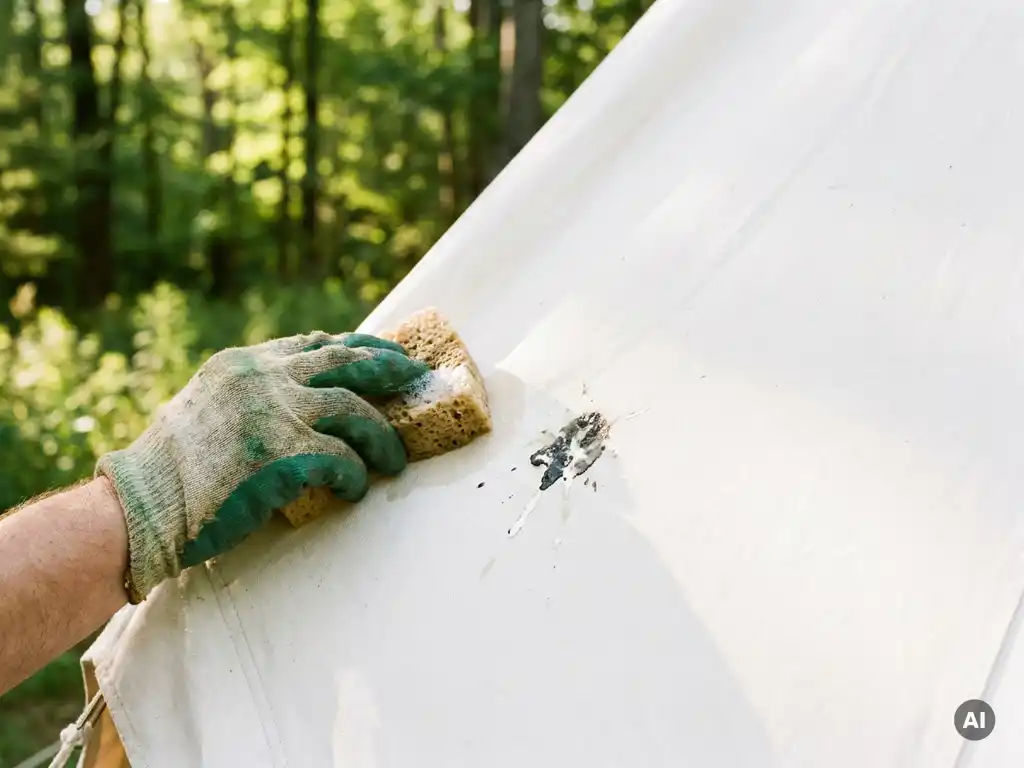
Bird droppings on your tent are one of the most common annoyances for campers. Not only do they look unsightly, but the acids in bird droppings can damage the tent fabric in the long run if you don’t deal with them quickly enough. Fortunately, the damage can be prevented if you take the right approach.
In this guide, you’ll find step-by-step instructions on how to safely and effectively remove bird droppings from tent fabric without damaging the material. Whether you’re dealing with canvas, polyester or nylon, the method remains largely the same.
Here’s what you’ll need for cleaning
Before you start cleaning the tent fabric, make sure you have the right materials to hand. Rushing the job using the wrong products is a common mistake that can damage the fabric or actually push the stain deeper into the fibres.
- A bucket of lukewarm water
- A soft brush or sponge (not steel wool or a hard scouring pad)
- A suitable tent fabric cleaner, such as a tent fabric shampoo or a stronger cleaner for stubborn stains
- A clean, dry cloth or microfibre cloth
- Optional: a garden hose with a low flow rate for rinsing
Usage never Ordinary washing-up liquid or all-purpose cleaner on tent fabric. These products damage the water-repellent coating and can weaken the fibres. Always choose a product specifically designed for tent fabric care.
Step-by-step guide to removing bird droppings from tent fabric
Start as soon as possible after discovering the stain. Fresh bird droppings are much easier to remove than dried-on droppings. If the droppings have already dried, don’t wait any longer – follow the steps below.
- Let the poo dry first, or soak it to loosen it. It may sound counterintuitive, but never try to wipe away wet poo straight away. That just smears it around. If the poo has already dried, soak it briefly in lukewarm water so that it comes away from the cloth.
- Carefully remove the largest pieces of dirt. Use a blunt knife, an old credit card or the back of a spoon to gently scrape the solid residue off the cloth. Always move from the outside inwards to prevent smearing.
- Apply the tent fabric cleaner to the stain. Apply the cleaner directly to the affected area and leave it to work for a minute or two. This gives the formula time to penetrate the fibres and loosen any remaining dirt.
- Gently scrub the stain with a soft brush. Work in small, circular movements and do not use too much force. The aim is to loosen the stain, not to wear away the coating.
- Rinse the area thoroughly with clean, lukewarm water. Make sure that all traces of cleaning product are thoroughly rinsed away. Any residual cleaning product may make the cloth sticky or affect its water-repellent properties.
After rinsing, check whether the stain has been completely removed. The fabric should feel clean, and there should be no discolouration or residue visible. If the stain is still partially visible, repeat steps 3 to 5, leaving the product to work for a little longer.
Ready for your next adventure?
Discover Rokimi’s professional cleaning and protection products and keep your tent fabric, awnings, boat covers and other outdoor equipment looking good for longer.
- ✓ Professional formula
- ✓ Specialist in cleaning & protection
- ✓ Certified quality
Check that the stain has been completely removed
Now that the cleaning is complete, it’s time to assess the result properly. Inspect the tent fabric in daylight, as artificial light can mask any remaining discolouration. Bird droppings contain pigments that can sometimes leave a slight discolouration, even after the stain itself has been removed.
- Let the cloth dry completely first before you make a final judgement. Wet fabric always looks different, and any remaining stains only become visible once the material has dried.
- View the treated area from several angles. Hold the fabric at an angle to the light to spot any subtle discolouration or the edges of any stains.
- Run your fingers over the surface. The fabric should feel smooth and even to the touch. A sticky or rough feel may indicate residual debris or a damaged coating.
Can you still see any remaining stains or discolouration? If so, it’s a good idea to use a stronger cleaner, such as a Heavy Duty Cleaner specially formulated for stubborn stains on tent fabric. Allow this to soak in thoroughly and repeat the rinsing step carefully.
Restore water repellency after cleaning
Every time you clean your tent, however carefully you do so, it affects the water-repellent coating on the tent fabric. This is normal and nothing to worry about, as long as you restore the protection afterwards. Do not skip this step, as a tent that has lost its water-repellent properties will not provide adequate protection during the next rain shower.
- Make sure the cloth is completely dry before applying a waterproofing agent. Moisture in the fabric prevents the protective coating from being absorbed.
- Apply the waterproofing agent evenly over the area being treated, or over the entire cloth if you have carried out a thorough clean. Work in smooth strokes and ensure an even layer.
- Leave the product to soak in and dry Follow the instructions on the packaging. During this period, protect the fabric from rain and direct sunlight.
- Test the water repellency by sprinkling a little water onto the treated surface. The water should run off the fabric immediately in droplets. If the water continues to soak into the fabric, apply a second coat of waterproofing agent.
A well-waterproofed tent fabric is not only water-resistant, but also more resistant to dirt and future stains, including those caused by a new visitor of the winged variety. Regular waterproofing will significantly extend the life of your tent.
How Rokimi helps with cleaning tent fabric
We understand that bird droppings on your tent need to be dealt with quickly and effectively, without you having to worry about damaging the fabric. Our products have been specially developed for tent fabric, boat covers and other outdoor textiles, so you always have the right product to hand.
- Hood & Tent Shampoo: ideal for regular cleaning and lighter stains on tent fabric, including bird droppings that are fresh or have not been absorbed too deeply
- Heavy Duty Cleaner: for stubborn stains and dried-on bird droppings that do not come off completely with ordinary shampoo
- Hood & Tent Protection: the most powerful impregnating agent of its kind, which fully restores water repellency after cleaning and provides long-lasting protection for the fabric
Our products do not need to be diluted and are suitable for canvas, polyester and nylon. This makes cleaning tent fabric as easy and safe as possible, even if it’s your first time using them. View our full product range, find out which applications to see if our resources are suitable, or visit the Rokimi website for further information and advice.
Everything you need for a clean and protected outdoor lifestyle.
Discover Rokimi’s range of professional cleaning and protection products.
BEKIJK ALLE PRODUCTEN →Frequently Asked Questions
How can I stop birds from pooing on my tent whilst camping?
Try not to pitch your tent under trees or in places where large numbers of birds gather, such as near water or rubbish bins. A tent cover or tarpaulin over your tent can also provide extra protection. In addition, after cleaning, you can apply a waterproofing agent so that future stains do not penetrate as deeply and are easier to remove.
What if the bird droppings have been on my tent fabric for days and there’s permanent discolouration?
For bird droppings that have been dried in for a long time, a Heavy Duty Cleaner is the best solution: leave this product to work for longer – up to five to ten minutes – before you start scrubbing. Repeat the treatment several times if necessary. If a slight discolouration remains, this is often superficial and does not affect the functionality of the cloth, but it is a reason to take action sooner in future.
Can I put my tent in the washing machine to remove bird droppings?
No, using a washing machine on tent fabric is strongly discouraged. The mechanical action and high temperatures damage the seams, the water-repellent coating and the fibres of the fabric. Always clean your tent by hand using the correct tent fabric cleaner and a soft brush, as described in this guide.
How do I know whether the water-repellent properties of my tent fabric have been sufficiently restored after cleaning?
The simplest test is the water droplet test: sprinkle some clean water onto the treated surface and check whether the water immediately beads up and rolls off the fabric. If the water soaks into the fabric, a second coat of waterproofing agent is required. Always carry out this test on a completely dry cloth, as a wet cloth will distort the test results.
How often should I waterproof my tent if I use it regularly?
As a rule of thumb, you should waterproof your tent at least once a season, and always immediately after a thorough clean. If you use your tent intensively or in changeable weather conditions, it may be advisable to do this twice a season. A good indication that it is time for another treatment is when water no longer beads up and rolls off the fabric, but soaks into it.
Are the cleaning products for tent fabric also suitable for other outdoor materials, such as a awning or boat cover?
Yes, products such as Rokimi’s Hood & Tent Shampoo and Heavy Duty Cleaner have been specially developed for a range of outdoor textiles, including boat hoods, awnings and caravan covers. Always check the product description to confirm that the material you wish to treat is included in the list. The cleaning method remains largely the same as for tent fabric.
What is the biggest mistake people make when removing bird droppings from tent fabric?
The most common mistake is wiping away wet bird droppings straight away with a cloth or tissue, which causes the droppings to spread deeper into the fibres and makes the stain bigger. Always allow fresh droppings to dry first, or soak dried droppings in lukewarm water to loosen them before you start scrubbing. Furthermore, never use harsh household cleaning products such as washing-up liquid or all-purpose cleaner, as these will damage the coating on the tent fabric.
Related Articles
- How can you prevent mould on tent fabric by waterproofing it properly?
- What is a good step-by-step guide to waterproofing tent fabric?
- What are the signs that your tent fabric needs to be waterproofed as a matter of urgency?
- What is the difference between fluorine-free and traditional wood preservative?
- How to remove bird droppings from tent fabric?