


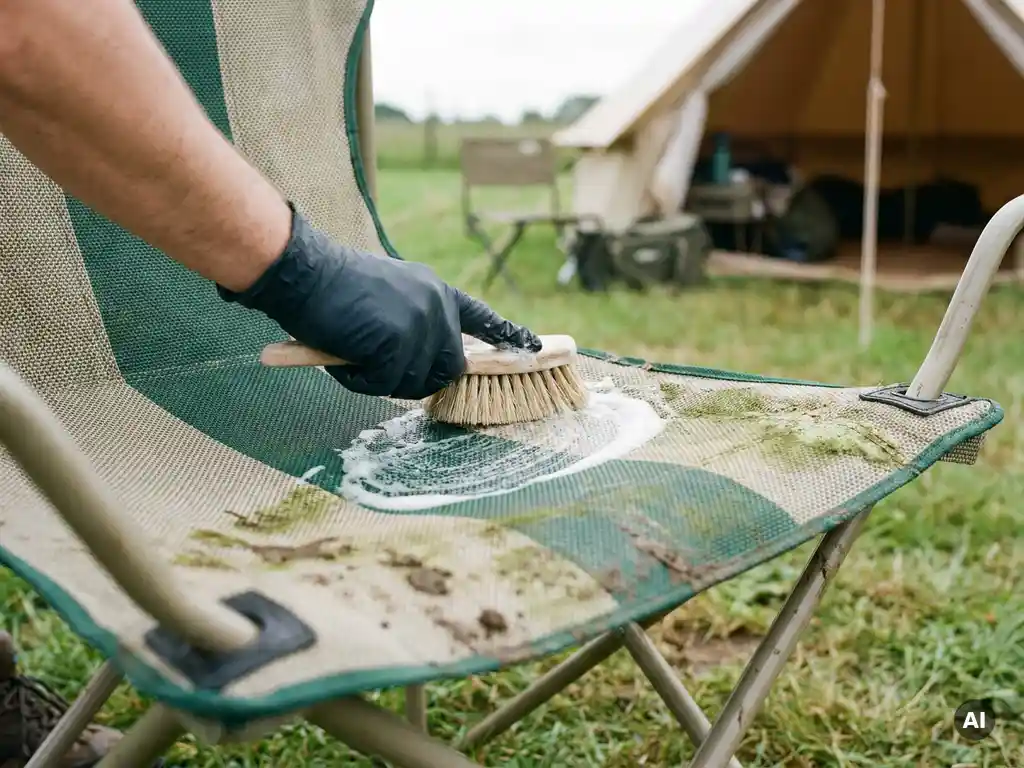
A fabric camping chair often needs a thorough clean after a busy camping season. Dirt, mould and stains build up in the fabric, and without proper maintenance, the fabric will quickly deteriorate. Fortunately, cleaning a fabric camping chair is easier than it seems, provided you follow the right steps.
This guide takes you through the entire process: from removing loose dirt to waterproofing the fabric after cleaning. Follow the steps in order for the best results and to make your chair look as good as new again.
What you’ll need for cleaning
Make sure you have everything to hand before you start. That way, you won’t have to stop halfway through and you’ll work more efficiently. The materials required are simple, and for most parts you won’t need much.
- A soft brush or a hand brush
- A bucket of lukewarm water
- A cleaning product specifically designed for fabrics (not a harsh household cleaner)
- A clean sponge or soft cloth
- A garden hose or an extra bucket for rinsing
- A water-repellent treatment for outdoor textiles
Please note: do not use bleach, benzine or all-purpose cleaner on fabric camping chairs. These products attack the fibres and damage the water-repellent coating that protects the fabric. Always choose a product that has been specially developed for tent fabric or outdoor textiles.
Remove loose dirt and coarse deposits
Always start by removing dry, loose dirt before using any liquid. Rubbing wet cloths over dry dirt drives the dirt particles deeper into the fibres, making it harder to clean later on.
- Unfold the chair fully and place it on a hard, clean surface outdoors.
- Gently tap the cloth with your hand to remove any loose dust and sand.
- Use a dry, soft brush to brush off any green deposits, moss or dried-on dirt. Work from top to bottom.
- Check the seams and folds of the fabric, as this is where most dirt tends to accumulate.
After this step, most of the loose dirt should have been removed. The cloth may not look clean yet, but the coarse layer of dirt is gone. That is exactly the aim before you carry on with wet cleaning.
Ready for your next adventure?
Discover Rokimi’s professional cleaning and protection products and keep your tent fabric, awnings, boat covers and other outdoor equipment looking good for longer.
- ✓ Professional formula
- ✓ Specialist in cleaning & protection
- ✓ Certified quality
Clean the cloth thoroughly using the correct method
Now that the loose dirt has been removed, it’s time to clean the upholstery thoroughly. The approach varies slightly depending on how dirty the seat is. For light soiling, a mild shampoo will suffice; for stubborn stains, mould or black streaks, you’ll need a more powerful cleaning product.
For light to normal soiling
- Lightly dampen the cloth with lukewarm water.
- Apply a cloth-specific shampoo to the cloth or a sponge.
- Rub the cloth using gentle, circular movements. Do not press too hard.
- Leave the product to take effect for a short while, following the instructions on the packaging.
- Rinse the cloth thoroughly with clean water to ensure no detergent residue remains.
For stubborn stains or green deposits
Stubborn dirt, mould patches or ingrained green deposits call for a more powerful approach. In such cases, use a heavy-duty cleaner specially formulated for heavily soiled outdoor textiles. Apply the cleaner to the affected areas, leave it to work thoroughly, and then scrub gently with a brush. Always rinse thoroughly.
After rinsing, you can tell whether the cloth is properly clean: it feels smooth and there is no longer any slimy film on it. If any stains are still visible, repeat the cleaning process on those specific areas before continuing.
Allow the chair to dry completely before storing it
Drying is a step that many people underestimate, but it is crucial. A camping chair that is stored whilst damp will attract mould. That is precisely what causes the green film and musty smell you’ll find the following season.
- Place the chair outdoors in a well-ventilated spot, preferably in the sun.
- Leave the chair fully unfolded so that all the fabric parts are exposed to the air.
- After a few hours, check that the fabric feels completely dry, even in the seams and folds.
- In cloudy or damp weather, leave it for longer, or dry the chair indoors in a dry place.
Only store the chair once the fabric is completely dry, including in the areas you can’t see straight away. If you’re in any doubt, wait another day. Once dry, the chair is ready for the final – and perhaps most important – step: waterproofing.
Waterproof the fabric for long-lasting protection
Cleaning alone is not enough. After every thorough wash, the fabric loses some of its water-repellent properties. Impregnation restores that protective layer and ensures that rainwater beads up and rolls off the fabric rather than being absorbed into the fibres.
- Make sure the cloth is completely dry and clean before you start.
- Apply the waterproofing agent evenly over the entire surface of the fabric. Use a spray bottle to ensure even coverage.
- Make sure you seal the seams and edges properly, as that’s where moisture seeps through most quickly.
- Allow the product to soak in and dry in accordance with the instructions on the packaging.
- Test the result by dripping a little water onto the cloth. The water should bead up and roll off.
Once impregnated, the fabric is protected against rain, dirt and UV rays. This means your camping chair will last considerably longer, and cleaning it next time will be much less of a hassle.
How Rokimi helps you clean your camping chair
We understand that you want to look after your outdoor gear properly without risking damage. That’s why we’ve developed products specifically designed for outdoor fabrics, from tent fabric to camping chairs.
- Hood & Tent Shampoo for regular cleaning of green deposits and everyday dirt
- Heavy Duty Cleaner for stubborn stains, mould and heavily soiled cloths
- Hood and Tent Protection, the most effective impregnating agent of its kind, for long-lasting water repellency after cleaning
Our formulas penetrate right down into the fibres of the fabric for a thorough clean and long-lasting protection. They are ready to use without diluting, and suitable for canvas, polyester and nylon. Whether you need a quick refresh or an intensive clean after winter storage, we have the right product for you.
View our full product range or find out which applications our products are suitable for. Ready to get started? Visit rokimi.com and place your order today.
Everything you need for a clean and protected outdoor lifestyle.
Discover Rokimi’s range of professional cleaning and protection products.
VIEW ALL PRODUCTS →Frequently Asked Questions
How often should I clean my fabric camping chair?
It is advisable to give your camping chair a thorough clean at least once a season, preferably at the end of the camping season before putting it into storage. If you use the chair intensively or in damp conditions, it is also a good idea to give it a clean halfway through the season. Regular maintenance prevents dirt and green deposits from becoming embedded deep within the fibres, making a thorough clean much easier later on.
Can I just put my fabric camping chair in the washing machine?
This is strongly discouraged. The washing machine is too harsh for the water-repellent coating on the fabric and may damage the chair’s frame if the fabric cannot be removed. Furthermore, the spin cycle and high temperatures may distort the fibres or damage the seams. Hand washing in accordance with the steps in this guide will give a better and safer result.
What should I do if there are still visible stains after cleaning?
Repeat the cleaning step, focusing on any remaining stains, using a heavy-duty cleaner for outdoor textiles, such as Rokimi Heavy Duty Cleaner. Leave the product to work for longer than during the first treatment and use a slightly stiffer brush for stubborn stains. Mould stains may sometimes require several treatments. Do not proceed to waterproofing until all stains have been completely removed, otherwise they will become trapped beneath the protective layer.
How do I know if my camping chair needs re-waterproofing?
A simple water test gives an immediate answer: drip a little water onto the fabric. If the water beads up and rolls off, the waterproofing is still working properly. If the water is absorbed straight away or forms large wet patches, it’s time to reapply the waterproofing. This is always necessary after a thorough clean, as washing partially removes the existing protective layer.
Can I use the same cleaning products on other camping equipment, such as my tent?
Yes, products specially developed for outdoor textiles, such as the Rokimi Hood & Tent Shampoo and Heavy Duty Cleaner, are suitable for a range of outdoor equipment made from canvas, polyester or nylon. These include tents, awnings, chair covers and camping cushions. However, always check the care label on the item you wish to clean and follow the product instructions to ensure that the product is suitable for that specific material.
What’s the best way to store my camping chair after cleaning it to prevent mould?
First and foremost, ensure that the 100% chair is dry before storage, including the seams and folds. Store the chair in a dry, well-ventilated place, preferably indoors or in a dry shed, and not in a damp cellar or garage. It is best to use a breathable storage bag rather than a sealed plastic bag, so that any residual moisture can escape and mould is prevented.
My camping chair smells musty after the winter. Can I get rid of that smell?
A musty smell is usually caused by mould growth resulting from damp storage. Start by giving it a thorough clean using a heavy-duty cleaner specifically designed to tackle mould and bacteria in the fabric. Then leave the chair to dry in the open air for as long as possible, preferably in direct sunlight, as UV light has an antibacterial effect. Once it has dried and been treated, the odour should have disappeared completely. Repeat the cleaning process if necessary.