


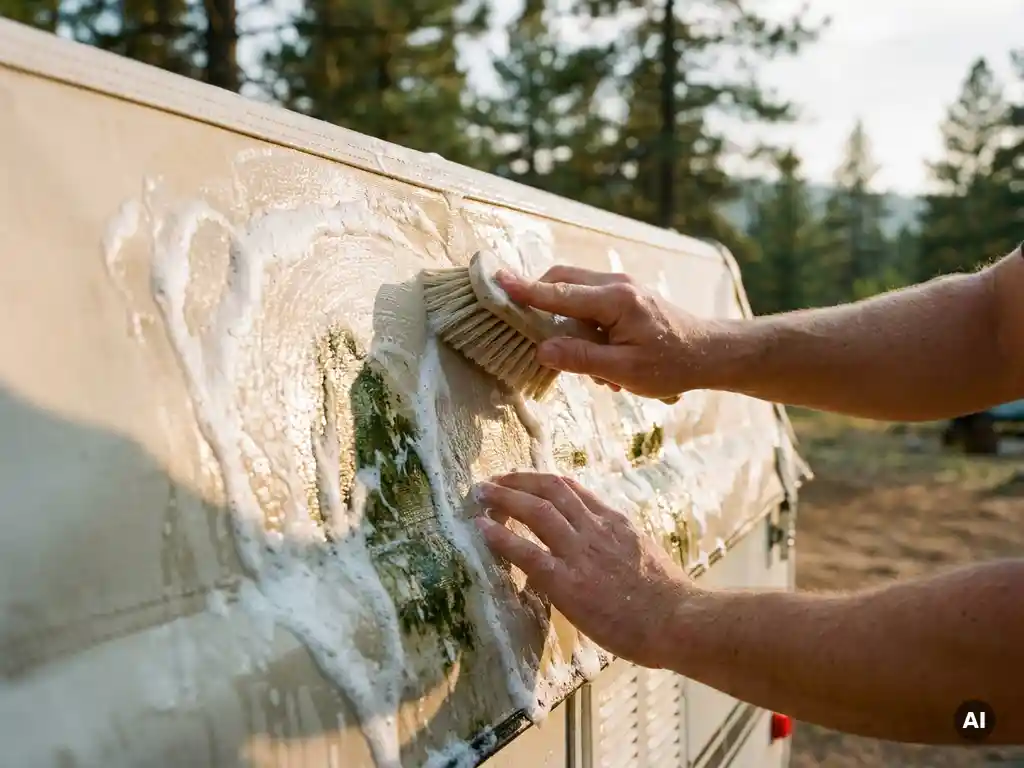
A folding trailer is a great investment for campers who want to combine comfort and convenience with the freedom of camping. However, after a season spent outdoors, or following a period in storage, the tent fabric often starts to look a bit grubby. Mould, dirt and stains build up, and if you do nothing about it, the fabric can lose its water-repellent properties. Fortunately, cleaning the fabric of a folding trailer is easier than it seems, as long as you follow the right steps.
In this guide, you’ll learn, step by step, how to thoroughly clean and waterproof the fabric of your folding trailer, so you can enjoy it for years to come. Whether you’re getting ready for the 2026 camping season or preparing your folding trailer for winter storage, with the right approach, the fabric will soon be as good as new.
Here’s what you’ll need to clean the tent fabric
Before you start, it’s a good idea to have everything to hand. Nothing is more annoying than realising halfway through the cleaning process that you’re missing something. Make sure you park the trailer on a flat surface with enough space to walk round it, and preferably do this on a cloudy day or in the shade. Direct sunlight causes cleaning products to dry out too quickly, making them less effective.
You’ll need the following:
- A soft brush or sponge (not a stiff wire brush, as this will damage the fabric)
- A garden hose or a bucket of water
- A gentle canvas shampoo for regular cleaning
- A powerful cleaner for stubborn stains and green deposits
- A waterproofing treatment specifically designed for tent fabric
- Clean cloths or a soft sponge for applying the waterproofing treatment
Please note the type of fabric used on your folding trailer. Most folding trailers have a canvas, polyester or a combination of both. Check this in advance to ensure that the products you use are suitable for that material.
Remove any loose dirt and green deposits from the cloth
Always start by removing any loose dirt before using water or cleaning products. If you start cleaning with water straight away, you’ll actually rub the dirt deeper into the fibres of the cloth. First, gently shake out the cloth and use a dry, soft brush to remove sand, leaves and dust.
- Set up the folding trailer fully so that you can reach all parts of the tarpaulin.
- Wipe the entire surface dry with a soft brush to remove loose dirt and dust.
- Next, rinse the canvas with a garden hose set to low pressure. Start at the top and work your way down, so that the dirt is washed downwards.
- Apply the tent fabric shampoo to the wet cloth and work it in with a soft brush or sponge, using circular movements.
- Pay particular attention to areas with green deposits, but do not rub too hard. Leave the product to work for a short while.
After this step, most of the surface dirt and lighter green deposits should already have been loosened. You’ll notice that the fabric already looks a lot fresher. Are there still any dark stains or stubborn deposits visible? If so, you’ll need to tackle them specifically in the next step.
Ready for your next adventure?
Discover Rokimi’s professional cleaning and protection products and keep your tent fabric, awnings, boat covers and other outdoor equipment looking good for longer.
- ✓ Professional formula
- ✓ Specialist in cleaning & protection
- ✓ Certified quality
Treat stubborn stains with a powerful cleaner
Not all stains can be removed with ordinary shampoo. Mould stains, deep-seated green deposits and dried-on dirt require a more powerful approach. For this, use a special heavy-duty cleaner specifically designed for tent fabric, so that you don’t damage the material whilst still cleaning it effectively.
- Identify the problem areas on the canvas and make a mental note of them before you start.
- Apply the powerful cleaner directly to the stain, without diluting it.
- Leave the product to work for a few minutes, depending on how dirty the surface is.
- Gently scrub the area with a soft brush, applying light pressure and using circular movements.
- Repeat this if necessary for particularly stubborn stains.
After treatment, check whether the stains have been sufficiently removed. In the case of extremely soiled tarpaulins, such as after a long period of winter storage, it may be necessary to repeat the treatment. Be patient and do not force the process. Harsh abrasives or excessive pressure can damage the fabric’s coating, which will permanently impair its water-repellent properties.
Rinse the tent fabric thoroughly and leave it to dry
Now that the stains have been treated, it’s time to rinse all the cleaning products out of the cloth completely. Any remaining cleaning agent can make the fabric stiff, damage the coating and cause white streaks during the next rain showers. Thorough rinsing is therefore just as important as the cleaning itself.
- Rinse the entire cloth thoroughly with plenty of clean water, working from top to bottom.
- Check that there is no foam or soap residue left.
- Rinse critical areas such as seams and corners particularly thoroughly, as cleaning product tends to linger there.
- Leave the folding trailer fully set up and let the fabric air-dry.
Make sure the fabric is completely dry before moving on to the next step. This may take several hours, depending on the weather and the temperature. Never fold the fabric whilst it is still damp, as this is a sure-fire way to encourage mould. A dry, breezy day is ideal. Is the fabric dry on the outside but still feels cool to the touch on the inside? If so, give it a little more time.
Waterproof the fabric for long-lasting water repellency
Cleaning alone is not enough. After washing, tent fabric loses some of its water-repellent properties. Impregnation restores this protective layer and ensures that water beads up and rolls off the fabric rather than soaking through it. Never skip this step, especially if you use your trailer tent extensively or camp in changeable weather.
- Make sure the fabric is completely dry before you start waterproofing it.
- Apply the waterproofing agent evenly to the cloth, working from top to bottom.
- Work in sections so that you don’t miss any parts.
- Pay particular attention to seams, corners and areas that are exposed to a lot of rain.
- Allow the product to soak in and dry in accordance with the instructions on the packaging.
Check the result by sprinkling a little water onto the fabric. If the water beads up and runs off, the waterproofing has been successful. Does the water soak in? If so, the fabric needs a second coat, or the waterproofing hasn’t had enough time to set properly. Once waterproofed, your folding trailer cover is ready for a new season full of adventure.
How Rokimi helps you clean your folding caravan awning
We understand that cleaning the canvas of your folding trailer is a job you want to do properly. Poor-quality products or the wrong approach can damage your expensive equipment, and that is exactly what we want to prevent. Our range has been specially developed for tent fabric, convertible tops and other outdoor materials, so you always have the right product to hand.
Here’s what we offer for cleaning and waterproofing your folding caravan awning:
- Hood & Tent Shampoo for regular cleaning of surface dirt and light green deposits
- Heavy Duty Cleaner for stubborn stains, mould and deep-seated grime that ordinary cleaners cannot remove
- Hood and Tent Protection, the most effective impregnating agent of its kind, for long-lasting water repellency after cleaning
- Products that require no dilution, ready to use for both beginners and experienced campers
- Formulas that penetrate deep into the fibres for thorough and long-lasting protection
Ready to tackle your folding trailer? Take a look our full product range and find out which product is best suited to your situation. Not sure which product you need? On our applications page you’ll find an overview by material type and application. Or visit our website For more information, place your order today.
Everything you need for a clean and protected outdoor lifestyle.
Discover Rokimi’s range of professional cleaning and protection products.
VIEW ALL PRODUCTS →Frequently Asked Questions
How often should I clean and waterproof the canvas of my folding trailer?
It is advisable to thoroughly clean and waterproof the tent fabric at least once a year, preferably at the start or end of the camping season. If you use your trailer tent extensively or in changeable weather, it’s a good idea to give it an extra clean halfway through the season. A good rule of thumb: if water no longer beads up but soaks into the fabric, it’s time to re-waterproof it.
Can I wash the tent fabric of my folding trailer in the washing machine as well?
No, this is strongly discouraged. The washing machine is too harsh on the coating and the fibres of the tent fabric, and the mechanical action can damage the seams and structure. Furthermore, washing machines do not always rinse out all detergent residues completely, which can permanently damage the water-repellent coating. Hand washing with a soft brush and a suitable tent fabric shampoo, such as Rokimi’s Hood & Tent Shampoo, is always the safest and most effective method.
What should I do if the fabric still lets water through after impregnation?
First, check that the fabric was completely dry before applying the waterproofing agent, as moisture in the fibres prevents proper adhesion. Once the fabric has been dry, apply a second coat of waterproofing agent and allow it to soak in and dry completely. In the case of very old or heavily worn fabric, the coating may be so damaged that several layers are required or that professional help is the only solution.
What’s the best way to store my folding trailer after cleaning it, so I don’t run into any surprises next season?
Always ensure that the canvas is completely dry before folding up the trailer tent for storage, as even a small amount of residual moisture is enough to cause mould to form. Ideally, store the folding trailer in a dry, well-ventilated place, such as a shed or garage, and avoid using sealed plastic sheeting, which can cause condensation. A breathable cover is ideal. You should also check the fabric from time to time, particularly during long-term winter storage, so that you can spot any problems early on.
Can I use ordinary household cleaning products if I don’t have any special tent fabric shampoo to hand?
This is strongly discouraged. Everyday products such as washing-up liquid, bleach or all-purpose cleaner are often too harsh and can permanently damage the water-repellent coating on the fabric or damage the fibres. They also often leave behind residues that make the fabric stiff or cause stains when it rains. Always use a product specifically designed for tent fabric, such as Rokimi’s Hood & Tent Shampoo, to provide your fabric with the best possible protection.
What is the difference between canvas and polyester awning fabric, and does that make a difference when it comes to cleaning?
Canvas is a natural, thicker material that is breathable but more susceptible to mould and green deposits, whilst polyester is synthetic and generally dries more quickly. When cleaning, the same principle applies to both materials: use mild, fabric-specific products and avoid stiff brushes or abrasive cleaners. Always check the product specifications of your cleaner and waterproofing agent to ensure they are suitable for the specific material of your folding trailer.
How do I remove stubborn mould stains that haven’t completely disappeared after the first clean?
Treat the affected areas again with a heavy-duty cleaner, such as Rokimi’s Heavy Duty Cleaner, and leave the product to work for longer than during the first treatment. Then rub gently with a soft brush using circular movements and repeat the process if necessary. Be patient and avoid applying too much pressure or using abrasive cleaners, as this will damage the coating. In the case of extremely deep-seated mould, a third treatment may be necessary before you proceed to waterproofing.